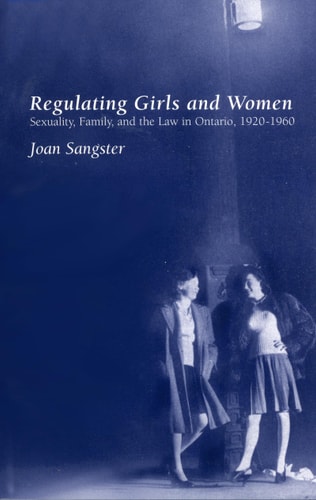
Regulating Girls and Women: Sexuality, Family, and the Law in Ontario 1920-1960
0
0
As an Amazon Associate and affiliate partner, Menrva Books earns from qualifying purchases. Learn more
Author Description
Analyzing key examples of the sexual and familial regulation (through the law) of girls and women in twentieth-century Canada, this work explores the ways in which class, race, and gender shape the definition and punishment of criminality. It also examines the changing social and legal definitions of "normal" versus "criminal" sexual and family relationships, using case studies of incest, childhood sexual abuse, wife assault, prostitution, girls in conflict with the law, and Native women and the law.
Menrva's Summary
THE THESIS
This work investigates how legal and social frameworks in Ontario between 1920 and 1960 were utilized to regulate the sexuality and familial roles of girls and women. Joan Sangster, a prominent historian of Canadian women's history, employs a critical analysis of legal archives and social welfare records to demonstrate how state power intersected with class, race, and gender. The book argues that the definition of criminality was not objective but was instead a tool used to enforce specific moral and social norms during a period of significant cultural transition.
THE SCOPE MAP
What You Will Find
- Historical analysis of Ontario legal statutes and social welfare policies from 1920 to 1960.
- Examination of the intersectional impact of class, race, and gender on judicial outcomes.
- Case studies covering incest, childhood sexual abuse, domestic assault, and prostitution.
- Investigation into the specific legal treatment of Native women and juvenile female offenders.
THE AUTHORITY PERSPECTIVE
Scholars and historians recognize this text as a foundational contribution to the study of Canadian social history and gendered legal regulation. Readers frequently note the rigorous archival research and the clarity with which the author connects individual case studies to broader systemic patterns of state control.
Page Count:
288
Publication Date:
2001-07-19
Publisher:
Oxford University Press
ISBN-10:
0195416635
ISBN-13:
9780195416633
History
Sex Discrimination Against Women
Sex and law
Law
Canadian History
Sociology
Gender Studies
Law_ontario
Abused Women
Community Tags
Similar Books