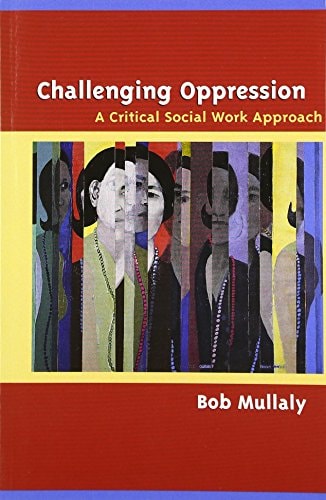
Challenging Oppression: A Critical Social Work Approach
0
0
As an Amazon Associate and affiliate partner, Menrva Books earns from qualifying purchases. Learn more
Author Description
In Challenging Oppression, Mullaly examines the personal, cultural, and structural or institutional levels of oppression. He demonstrates how and why social workers should approach those who experience social problems based on an imposed inferior type of citizenship (gender, age, disabilities, colour, sexuality) with a broader and deeper understanding of the dynamics and various forms of oppression. Drawing on the insights of such radical thinkers as Frantz Fanon, Paulo Freire, and Albert Memmi this important analysis proposes a psychology of liberation so that all oppressed peoples might resist the dominant hegemony that encourages them to internalize and blame themselves for their own oppression by accepting as normal and inevitable the present society and its frequently oppressive social institutions.
Menrva's Summary
THE THESIS
This book investigates how social workers can identify and dismantle the systemic, cultural, and personal structures of oppression that marginalize vulnerable populations. Bob Mullaly, a scholar in the field of social work, utilizes a radical theoretical framework to analyze how dominant societal hegemonies force individuals to internalize their own oppression. By integrating the philosophies of thinkers such as Frantz Fanon and Paulo Freire, the author argues for a psychology of liberation that empowers both the practitioner and the client to challenge institutionalized inequality.
THE SCOPE MAP
What You Will Find
- Analysis of oppression across personal, cultural, and institutional levels.
- A theoretical framework for a psychology of liberation in social work practice.
- Critical examination of how social institutions perpetuate inferior citizenship based on gender, age, disability, and race.
- Strategies for resisting dominant hegemonies that encourage self-blame among oppressed groups.
THE AUTHORITY PERSPECTIVE
Experts in the field of social work recognize this text as a foundational resource for understanding the intersection of radical theory and clinical practice. Readers frequently note the academic density of the prose, which serves as a rigorous guide for students and professionals seeking to integrate social justice into their work.
Page Count:
232
Publication Date:
2002-03-01
Publisher:
Oxford University Press
ISBN-10:
0195416953
ISBN-13:
9780195416954
Psychology
Politics
Public Policy
Sociology
Social justice
Social Work
New Used & Rental Textbooks
Community Tags
Similar Books