Author Description
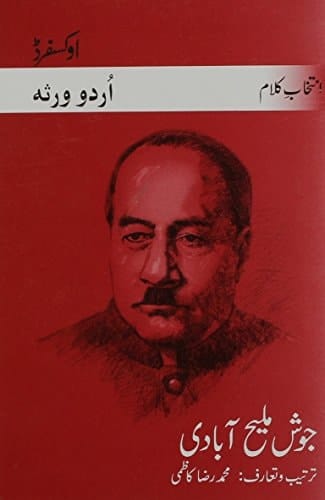
Taking a historical view, the study regards the formative Deccan period as particularly important, both for the natural bent of the language and the natural inclination of the poets. The author's view that the pure, indigenous Urdu is better than the Persianised Urdu is clearly explained. This literary history ends with a notice on Mohammad Iqbal. When the book was written the Progressive Writers' Movement had not been launched, and the author stood at a cusp. From this vantage, he provides us with a useful summary of the past, and gives a context to unfolding trends in literature. Another interesting, in fact important, aspect of this work is that the author is rarely dismissive of any poet, however minor. The author's credentials as a historian of literature are validated by the place he assigns to minor poets who make up the general fabric of literature to a far greater extent than the major poets-the major poets being too individual-and their sameness being a challenge to a discerning critic seeking precision
Menrva's Summary
THE THESIS
This work investigates the historical development and linguistic evolution of Urdu literature, specifically examining the transition from the formative Deccan period to the early twentieth century. T. Grahame Bailey, a recognized scholar of South Asian languages, utilizes a comprehensive historical framework to analyze the stylistic shifts within the Urdu canon. He argues for the aesthetic superiority of indigenous Urdu over heavily Persianized variants, providing a critical lens through which to view the trajectory of the language. The text serves as a bridge between classical traditions and the emerging literary trends that preceded the Progressive Writers' Movement.
THE SCOPE MAP
What You Will Find
- A detailed examination of the Deccan period as the foundational era of Urdu poetry.
- A critical comparison between indigenous Urdu and Persianized linguistic influences.
- Biographical and literary assessments of both major and minor poets to illustrate the broader literary fabric.
- A concluding analysis of the work of Mohammad Iqbal as a marker of the era's literary evolution.
THE AUTHORITY PERSPECTIVE
Scholars and historians of South Asian literature frequently cite this text as a foundational reference for understanding the pre-modern and early modern development of Urdu. Readers often note the academic density of the prose and the author's meticulous attention to minor figures who are often overlooked in more generalized literary histories.
Page Count:
135
Publication Date:
2008-01-01
Publisher:
OUP Pakistan
ISBN-10:
0195475186
ISBN-13:
9780195475180
History
Non-Fiction
Asian
Urdu
Literary Criticism
Community Tags
Similar Books