Author Description
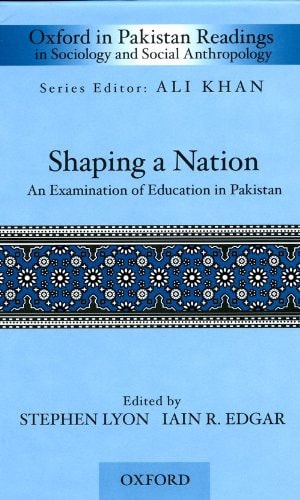
Education is the key to transforming a society and Shaping a Nation is particularly pertinent because of the use and misuse of education in Pakistan. The contributors support efforts at widening access to formal education but recognize that education has consequences and that while some, perhaps most, are beneficial, others can be highly damaging. Thus, while literacy in Pakistan has slowly but steadily improved, there has been a corresponding increase in social fragmentation and dissatisfaction. To illustrate their viewpoints, the contributors examine the profound impact of General Zia's Islamization programs in the 1980s, which continue to shape the scope of what is possible within formal education. The authors also examine the wide rift between the various state-funded and private schooling opportunities. State-funded education currently lags behind the UN Millennium Development Goals and this inadequate provision has left a vacuum for other groups to move in and introduce rival agendas. All of the contributions focus on particular aspects of education across Pakistan. They identify a number of the issues involved in providing high quality mass education, including the language of instruction, source of financing, nationalist and religious agendas embedded within the curricula, gender role expectations, and historical legacies which have shaped the educational environment. Nestled in amongst the complex issues are examples of high quality education and dedicated educationalists who achieve daily miracles. Thus, Shaping a Nation portrays a range of views on how education in Pakistan is, what it could be, and perhaps most importantly what it ought to be.
Menrva's Summary
THE THESIS
This volume investigates the complex role of education in Pakistan, questioning how institutional frameworks and curricula contribute to both national development and social fragmentation. The authors, Iain R. Edgar and Stephen Lyon, curate a collection of scholarly contributions that analyze the historical, religious, and political factors influencing the Pakistani educational landscape. By examining the legacy of 1980s Islamization programs alongside contemporary disparities between state and private schooling, the text argues that education serves as a contested site for competing national and ideological agendas.
THE SCOPE MAP
What You Will Find
- Analysis of the impact of General Zia's Islamization programs on modern curricula.
- Examination of the socioeconomic divide between state-funded and private educational institutions.
- Discussion of systemic challenges including language of instruction, gender role expectations, and financing.
- Case studies highlighting the tension between nationalist agendas and the goal of high-quality mass education.
THE AUTHORITY PERSPECTIVE
Experts identify this work as a critical resource for understanding the intersection of anthropology and educational policy in South Asia. Readers frequently note the academic density of the prose, which provides a rigorous examination of the structural barriers facing the Pakistani school system.
Page Count:
350
Publication Date:
2010-06-28
Publisher:
Oxford University Press
ISBN-10:
019547709X
ISBN-13:
9780195477092
History
Social anthropology
Pakistan
Sociology
Education
Community Tags
Similar Books