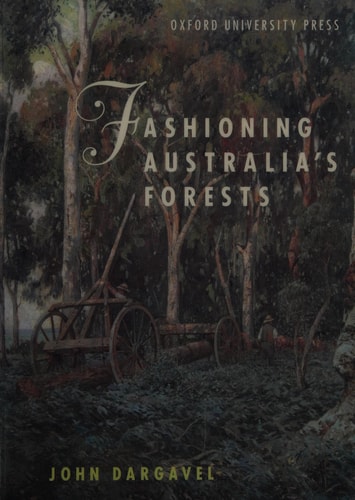
Fashioning Australia's Forests
0
0
As an Amazon Associate and affiliate partner, Menrva Books earns from qualifying purchases. Learn more
Author Description
For more than twenty years, Australia's forests have been the subject of angry controversy. Industry groups, timber towns, professional foresters, trade unions, economists, developers and environmentalists have all voiced different proposals, based on mutually exclusive values. Major battles have aroused intense passions and influenced elections. But the book not only covers recent events; it reviews forest management from Aboriginal times, demonstrating that the forests and our conceptions of them are socially constructed Dr Dargavel weaves together the story of industrial development and forest use with the slow acceptance of the case for forest conservancy. He shows how various 'resource regimes' evolved, and how they fashioned the forests in different ways-ecologically, spatially and socially. He then describes the challenges to these established patterns since the 1970s--industrial restructuring, woodchip exports, unsustainable harvesting, and the rise of the environmental movement. The book concludes with the prospects for the forests, their industries and workers, in a highly uncertain future. Australians must choose between travelling the "low road" of apathetic submission to market forces and ignorance and taking a long, hard "high road" towards sustainable development in which both social and environmental needs are taken seriously. The issues discussed will interest those involved in forestry, historical geography, and environmental sciences, history, and politics.
Menrva's Summary
THE THESIS
This book investigates the historical evolution of forest management in Australia to determine how competing social, economic, and environmental values have shaped the landscape over time. Dr. John Dargavel, an expert in forest history and policy, utilizes a multidisciplinary approach to analyze how various resource regimes have influenced ecological and spatial outcomes. By tracing the trajectory from Aboriginal land management to modern industrial practices, the author argues that current forest conditions are the result of deliberate social construction rather than natural progression alone. The work ultimately challenges readers to consider the transition from market-driven exploitation toward a model of sustainable development.
THE SCOPE MAP
What You Will Find
- A comprehensive historical review of Australian forest management practices spanning from Aboriginal stewardship to the late 20th century.
- An analysis of the 'resource regimes' that have dictated industrial development and woodchip export policies.
- Examination of the socio-political conflicts between industry groups, environmentalists, and government bodies.
- A critical assessment of the future prospects for forest industries, workers, and ecological conservation.
THE AUTHORITY PERSPECTIVE
Experts recognize this work as a foundational text for understanding the intersection of environmental policy and historical geography in the Australian context. Readers frequently note the academic rigor of the prose, which provides a balanced view of the complex tensions between economic development and conservation efforts.
Page Count:
328
Publication Date:
1995-12-14
Publisher:
Oxford University Press
ISBN-10:
019553526X
ISBN-13:
9780195535266
Politics
History
Forestry
Australia
Geography
Community Tags
Similar Books