Tracks, Scats and Other Traces: A Field Guide to Australian Mammals
0
0
As an Amazon Associate and affiliate partner, Menrva Books earns from qualifying purchases. Learn more
Author Description
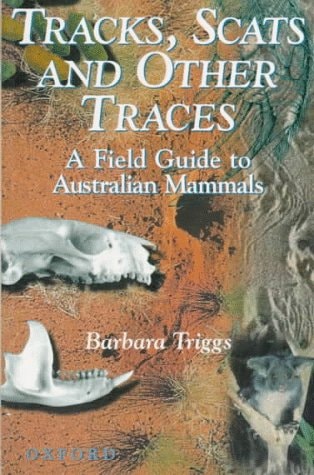
This book, an enlarged and updated successor to Mammal Tracks and Signs: A Field guide for South-Eastern Australia (winner of the Whitley Award for the Best Field Guide in 1984), covers all Australian states and territories, contains hundreds of new illustrations and extensive new text, and is formatted for easy identification of the visible traces left by mammals in their passage. It is divided into four forms of classification: drawings of 'perfect' tracks matched with photographs of the same tracks in sand or mud; color illustrations depicting scats of 128 species of mammals--with a distribution maps and habitat information--along with pellets and scats of birds, reptiles and invertebrates; detailed descriptions and over 70 color photographs of the distinctive traces of mammals at shelters and feeding sites; and 40 full page plates of skulls, lower jaws, humeri and femurs covering the more commonly found species, plus a detailed guide covering all mammal groups. Naturalists are becoming increasingly aware of the value of the indirect methods of finding and identifying mammals. This handbook of detection will be an essential companion to be kept in the pocket, backpack or car for constant ready reference.
Menrva's Summary
THE THESIS
This book investigates the methodology of identifying Australian mammal species through the analysis of indirect physical evidence left in the environment. Barbara Triggs, an expert in Australian wildlife tracking, synthesizes years of field observation into a comprehensive identification framework. The text utilizes a combination of comparative illustrations, high-resolution photography, and distribution mapping to provide a reliable diagnostic tool for naturalists and researchers. By focusing on tracks, scats, and skeletal remains, the author provides a systematic approach to wildlife detection that does not require direct visual contact with the animals themselves.
THE SCOPE MAP
What You Will Find
- Comparative analysis of tracks using both technical drawings and field photographs.
- A comprehensive catalog of scats for 128 mammal species, including bird, reptile, and invertebrate comparisons.
- Detailed documentation of feeding sites and shelter traces.
- Osteological identification guides featuring 40 full-page plates of skulls and limb bones.
THE AUTHORITY PERSPECTIVE
Experts recognize this work as a foundational reference for Australian field biology and wildlife management. Readers frequently note the practical utility of the book's layout, which is designed for rapid identification in remote field conditions.
Page Count:
352
Publication Date:
1996-11-28
Publisher:
Oxford University Press
ISBN-10:
0195536436
ISBN-13:
9780195536430
Nature
Science
Mammals
Australia
Field Guide
Zoology
Community Tags
Similar Books