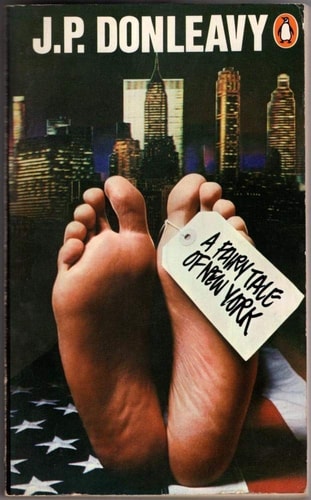
A Fairy Tale of New York
0
0
As an Amazon Associate and affiliate partner, Menrva Books earns from qualifying purchases. Learn more
Author Description
A Fairy Tale of New York is a funny, lusty, and sad novel of comic genius. Returning from study abroad, Cornelius Christian enters customs with his luggage and his dead wife. His first encounter in New York is with a funeral director, with whom he reluctantly takes employment to pay for the burial expenses. In the course of his duties he meets the beautiful Fanny Sourpuss over her millionaire husband's dead body. However, his over-enthusiastic handling of his first corpse lands him in court. Cornelius Christian wanders through the great sad cathedral that is New York, examining the human condition in all its comic pathos and lonely absurdity. Whether lingering in the Automat drinking from half empty coffee cups and stealing baked beans from the plates of customers who go looking for ketchup, or finding love on a street corner only to end up fighting his way out of a hooker's fists, Cornelius Christian, heroic anti-hero, sings of life's goodness in the wake of disaster.
Menrva's Summary
THE PULSE
Cornelius Christian arrives in New York City carrying his deceased wife, initiating a series of grimly comedic encounters that define his struggle for survival.
Christian navigates the urban landscape as an outsider, forced into the funeral industry to settle debts while grappling with the absurdity of death and social alienation. His path is obstructed by bureaucratic hurdles, eccentric characters, and his own penchant for chaotic misfortune. The narrative utilizes a picaresque framework, following the protagonist through a series of disjointed, often surreal episodes that highlight the indifference of the city. The prose maintains a distinct, rhythmic cadence that mirrors the protagonist's erratic movement through the metropolitan environment.
INSIDE THE PAGES
- First-person perspective focusing on the internal monologue of an anti-hero
- Picaresque narrative structure featuring episodic encounters
- Satirical examination of the funeral industry and urban bureaucracy
- Use of dark humor to address themes of grief and mortality
- Stylized, rhythmic prose reflecting the protagonist's disorientation
- Exploration of the human condition through the lens of absurdity
- Vivid, often grotesque character sketches of New York residents
- Focus on the isolation inherent in large-scale urban living
THE COLLECTIVE ECHO
Discussion often centers on the author's unique linguistic style, which blends lyrical intensity with biting, cynical humor. Readers frequently highlight the protagonist's status as a quintessential anti-hero whose resilience in the face of constant misfortune provides the narrative's core tension. Critics often note the book's ability to balance profound existential sadness with moments of slapstick comedy, creating a tone that is both unsettling and engaging. Many readers appreciate the atmospheric depiction of mid-century New York, which serves as a character in its own right rather than a mere backdrop. The work is widely recognized for its refusal to provide easy resolutions, leaving the reader to contemplate the inherent absurdity of the human experience.
Page Count:
336
Publication Date:
1975-01-01
Publisher:
Penguin Books
ISBN-10:
0140039643
ISBN-13:
9780140039641
Literary Fiction
Satire
Post-War
Black Comedy
Urban