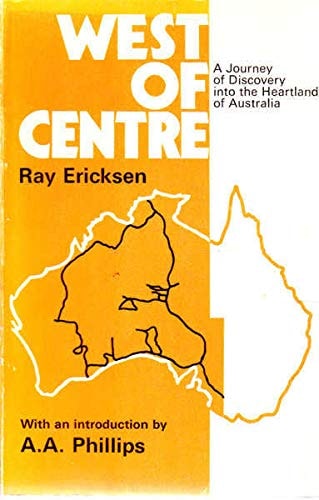
West of Centre: A Journey of Discovery into the Heartland of Australia
0
0
As an Amazon Associate and affiliate partner, Menrva Books earns from qualifying purchases. Learn more
Author Description
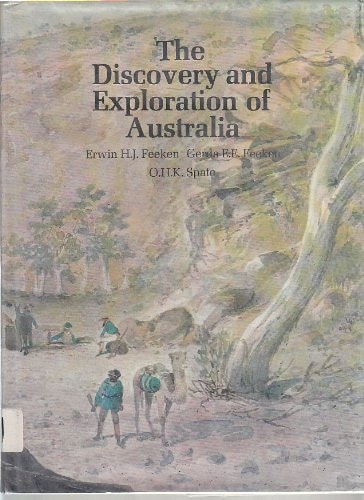
The Outback is the vast, remote, arid area of Australia. The term "the outback" is generally used to refer to locations that are comparatively more remote than those areas named "the bush" which, colloquially, can refer to any lands outside the main urban areas. Early European exploration of inland Australia was sporadic. More focus was on the more accessible and fertile coastal areas. The first party to successfully cross the Blue Mountains just outside Sydney was led by Gregory Blaxland in 1813, 25 years after the colony was established. People starting with John Oxley in 1817, 1818 and 1821, followed by Charles Sturt in 1829–1830 attempted to follow the westward-flowing rivers to find an "inland sea", but these were found to all flow into the Murray River and Darling River which turn south. Over the period 1858 to 1861, John McDouall Stuart led six expeditions north from Adelaide into the outback, culminating in successfully reaching the north coast of Australia and returning, without the loss of any of the party's members' lives. This contrasts with the ill-fated Burke and Wills expedition in 1860–61 which was much better funded, but resulted in the deaths of three of the members of the transcontinental party. The Overland Telegraph line was constructed in the 1870s along the route identified by Stuart. Exploration of the outback continued in the 1950s when Len Beadell explored, surveyed and built many roads in support of the nuclear weapons tests at Emu Field and Maralinga and rocket testing on the Woomera Prohibited Area. Mineral exploration continues as new mineral deposits are identified and developed. source: Wikipedia
Menrva's Summary
THE THESIS
This work investigates the geographical, historical, and cultural identity of the Australian Outback through the lens of exploration and remote settlement. The author, Ray Ericksen, provides a personal account of traversing the arid interior, contextualizing his observations within the broader history of European exploration in Australia. By contrasting early colonial attempts to find an inland sea with later industrial and mineral developments, the text examines the human relationship with a harsh, expansive landscape.
THE SCOPE MAP
What You Will Find
- Historical overview of 19th-century expeditions including John McDouall Stuart and the Burke and Wills party.
- Analysis of the development of infrastructure such as the Overland Telegraph line.
- Observations on the mid-20th-century expansion of roads for nuclear and rocket testing.
Scope Limits
- The text does not provide a comprehensive guide to modern tourism or contemporary indigenous cultural history.
- It focuses primarily on the European perspective of exploration and development rather than ecological or biological studies.
THE AUTHORITY PERSPECTIVE
Readers frequently note that the text serves as a thoughtful blend of personal travelogue and historical inquiry. Experts highlight the book as a useful resource for understanding the historical context of Australian inland development and the psychological impact of the vast, arid interior.
Page Count:
234
Publication Date:
1973-01-01
Publisher:
Heinemann Educational Australia
ISBN-10:
0140037381
ISBN-13:
9780140037388
History
Travel
Exploration
Australia
Geography
Community Tags
Similar Books