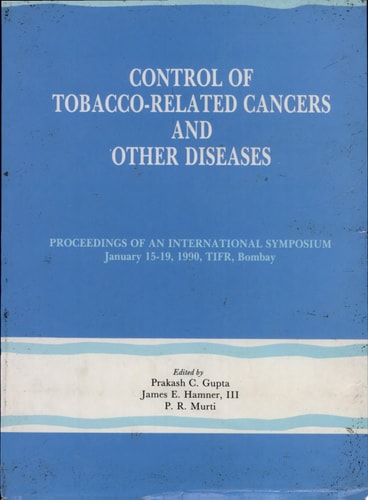
Control of Tobacco-related Cancers and Other Diseases
0
0
As an Amazon Associate and affiliate partner, Menrva Books earns from qualifying purchases. Learn more
Author Description
Tobacco use is widely recognized as the most important preventable cause of death and disease in the world today. In most countries its use is synonymous with cigarette smoking, but in others tobacco is used more often in other forms as well. In India, tobacco is more commonly used in the form of bidi smoking and botel quid (pan) chewing even more than in cigarettes. The health consequences of cigarette smoking and other forms of tobacco use encompass a wide spectrum of diseases including cancers of the mouth, lung, larynx, pharynx and oesphagus; diseases of the heart, circulatory system and lungs; and if used during pregnancy, adverse effects on the fetus. Even second-hand passive smoking is shown to cause and influence the risks for other diseases. Tobacco control in any country, however, is not simply a health problem. It has major implications for economics, agriculture, law, and individual and social behavior. Therefore, tobacco control must involve a multidimensional, multidisciplinary approach. In this volume, the issue of tobacco control is addressed from many points of view by leading international experts in clinical medicine, public health, biostatistics and behavioral sciences, agriculture, law and policy analysis. The articles provide an in-depth overview on various topics central to the theme of tobacco is used, their adverse health consequences with special empahsis on oral health and cancer, evidence from experimental studies, experiences with tobacco control and intervention programs, and specific legal and policy issues. This book on the control of tobacco-related cancers and other diseases would be a valuable resource for state-of-the-art reviews, original research papers, thought-provoking articles, and its coverage of off-beat topics.
Menrva's Summary
THE THESIS
This volume investigates the multifaceted global challenge of tobacco control by examining the intersection of clinical pathology, public health policy, and socioeconomic behavior. The authors, a team of international experts in medicine, biostatistics, and law, argue that tobacco-related disease is not merely a clinical issue but a systemic problem requiring a multidisciplinary intervention strategy. By synthesizing experimental data with policy analysis, the text provides a comprehensive framework for understanding the health consequences of various tobacco consumption methods, including bidi smoking and betel quid chewing.
THE SCOPE MAP
What You Will Find
- Clinical analysis of tobacco-related cancers, specifically focusing on oral, lung, and esophageal malignancies.
- Comparative studies on global tobacco consumption patterns, including regional variations like bidi and pan usage.
- Multidisciplinary policy frameworks addressing the economic, agricultural, and legal dimensions of tobacco regulation.
- Evidence-based reviews of intervention programs and their efficacy in public health settings.
THE AUTHORITY PERSPECTIVE
Experts recognize this volume as a comprehensive reference for professionals working in public health and oncology. Readers frequently note the academic density of the prose, which serves as a foundational resource for those analyzing the intersection of clinical medicine and social policy.
Page Count:
372
Publication Date:
1993-02-25
Publisher:
Oxford University Press
ISBN-10:
0195629612
ISBN-13:
9780195629613
Tobacco physiological effect
Public Health
Oncology
Sociology
Medicine
Community Tags
Similar Books













Reader Comments
Share Your Thoughts
No comments yet. Be the first to share your thoughts!