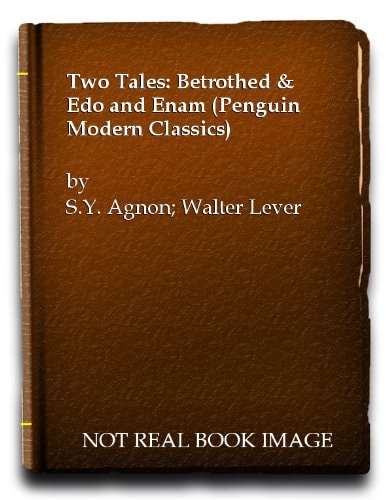
Two Tales: Betrothed and Edo and Enam
0
0
As an Amazon Associate and affiliate partner, Menrva Books earns from qualifying purchases. Learn more
Author Description
No description available.
Menrva's Summary
THE PULSE
Two distinct narratives explore the complexities of human connection and the weight of tradition within the shifting landscapes of early twentieth-century Jewish life. In these two novellas, Agnon examines the internal conflicts of characters bound by social expectations and personal desire. The protagonists navigate environments where religious duty and individual longing frequently collide, creating a tension that drives the narrative forward. Through a prose style that blends realism with symbolic depth, the author constructs a world where the past exerts a constant, often heavy, influence on the present. The narrative framework utilizes a deliberate, contemplative pace to reveal the psychological states of those caught in the transition between old-world values and modern existence.
INSIDE THE PAGES
- Exploration of traditional Jewish communal life and its constraints
- Use of symbolic imagery to represent internal psychological states
- Focus on the tension between personal desire and social obligation
- Intricate prose style characteristic of early twentieth-century Hebrew literature
- Examination of the role of memory and history in shaping identity
- Character-driven narratives that prioritize internal monologue over external action
- Atmospheric depiction of specific cultural and geographic settings
- Themes of alienation and the search for belonging
THE COLLECTIVE ECHO
Readers and critics frequently highlight Agnon’s ability to weave complex philosophical questions into seemingly simple domestic scenarios. Discussion often centers on the author's mastery of language and his unique capacity to evoke a sense of nostalgia mixed with profound existential unease. Many observers note that the pacing is methodical, requiring a patient reader who appreciates subtle character development over rapid plot progression. The effectiveness of the atmosphere is often cited as a primary strength, as it grounds the abstract themes in a tangible, albeit haunting, reality. Ultimately, the work is recognized for its contribution to the development of modern Hebrew prose and its enduring relevance in exploring the human condition.
Page Count:
160
Publication Date:
1971-01-01
Publisher:
Penguin Modern Classics / Penguin Books Ltd
ISBN-10:
0140031588
ISBN-13:
9780140031584
Fiction
Literary Fiction
Short Stories
Classic Literature
Hebrew