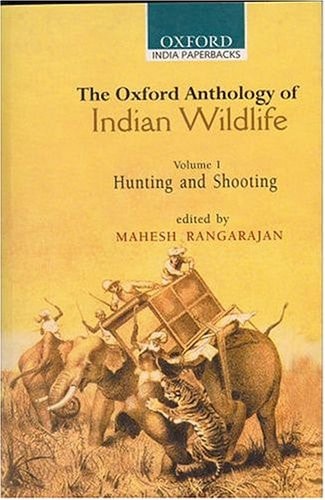
The Oxford Anthology of Indian Wildlife
0
0
As an Amazon Associate and affiliate partner, Menrva Books earns from qualifying purchases. Learn more
Author Description
The Indian subcontinent is home to an array of wildlife, attracting many a hunter and naturalist who have recorded their encounters with animals in the wild. This anthology compiles a wide-ranging selection of such writings, covering the hunt in its many forms: as ritual, as daily pursuit, as spectacle or for subsistence, on foot or mounted on an animal, with or without trained animals, in search of game, and so on. Hunting anecdotes may seem inappropriate with today's ecological awakening, but the written accounts left behind by hunters describe how the land looked at a time when hunting was a way of life. They also offer insight into the behavior and ecology of species that now exist only in isolated spots or have vanished entirely from the region. These celebrations of the hunt now provide vital information about diminishing ecosystems. The accounts included here show why India merited the epithet "Hunter's Paradise" as they bring to life the hunting of various regions, each with its prize quarry. Some accounts describe the rich array of game in the hills and mountains, beyond the tropical forest and thorn jungles. This volume offers insight into different hunting techniques--falconry, cheetah coursing, elephant round-ups--of the tribal and peasant hunters and trappers and of princes and sahibs. The accounts are highly evocative with their descriptions of the thrill and terror of the hunt for a man-eater or a rogue elephant. As the first part a two-volume series that brings together wildlife from the days of the Raj to present time, this book is a rich resource for scholars and specialists and an engaging historical account for the general reader.
Menrva's Summary
THE THESIS
This anthology investigates the historical relationship between human hunting practices and the ecological landscape of the Indian subcontinent. Mahesh Rangarajan, a noted environmental historian and scholar, compiles a diverse array of primary source accounts to examine how hunting functioned as a social, ritual, and survival activity across different eras. By curating these historical records, the author provides a framework for understanding the transition from colonial-era hunting culture to modern ecological awareness, highlighting the value of these texts as records of biodiversity and habitat change.
THE SCOPE MAP
What You Will Find
- Historical hunting accounts spanning the era of the British Raj to the modern period.
- Detailed descriptions of diverse hunting methodologies including falconry, cheetah coursing, and elephant round-ups.
- Primary source narratives from a wide social spectrum, ranging from tribal hunters to colonial sahibs and Indian royalty.
- Ecological insights into species behavior and habitat conditions that have since shifted or vanished.
THE AUTHORITY PERSPECTIVE
Scholars and environmental historians frequently cite this volume as a critical primary source collection for understanding the intersection of colonial history and wildlife management in India. Readers note that the text provides a balanced, academic perspective on the complex legacy of hunting in the region.
Page Count:
452
Publication Date:
2002-01-03
Publisher:
Oxford University Press
ISBN-10:
0195655419
ISBN-13:
9780195655414
History
Nature
Anthology
India
Wildlife
Zoology
Community Tags
Similar Books