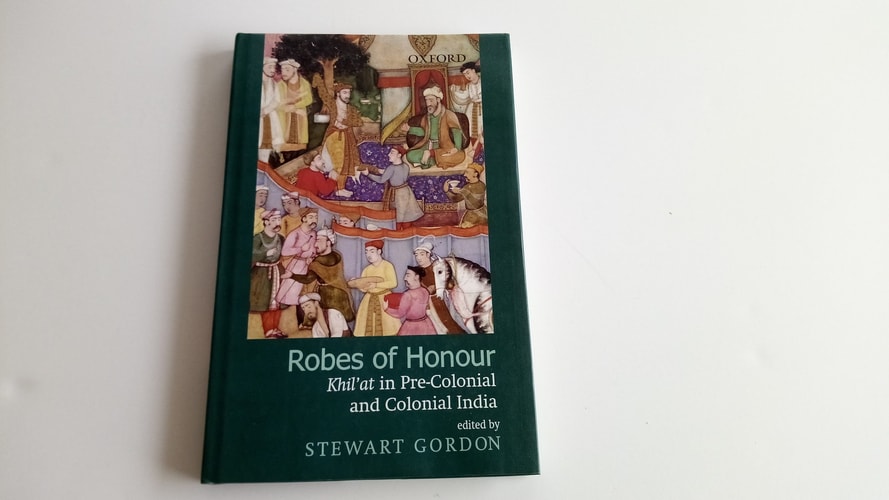
Robes of Honour: Khilat in Pre-Colonial and Colonial India
0
0
As an Amazon Associate and affiliate partner, Menrva Books earns from qualifying purchases. Learn more
Author Description
This volume analyzes the khilat ceremony, the tradition of honorific robing, prevalent in South Asia in the pre- colonial and colonial periods. The essays here examine the historical depth, geographic spread and general importance of the custom.
Menrva's Summary
THE THESIS
This volume investigates the historical significance and socio-political function of the khilat ceremony, a tradition of honorific robing that served as a primary mechanism for establishing and maintaining power dynamics in South Asia. Stewart Gordon, a scholar specializing in the history of pre-colonial and colonial India, compiles a series of essays that examine how this ritualized exchange of garments functioned as a language of authority. By analyzing the geographic spread and historical evolution of the practice, the text argues that the khilat was not merely a ceremonial gesture but a critical instrument of statecraft and diplomatic negotiation between rulers and subjects.
THE SCOPE MAP
What You Will Find
- Historical analysis of the khilat ceremony across pre-colonial and colonial South Asian eras.
- Examination of the symbolic language of honorific robing in diplomatic and political contexts.
- Comparative study of how the custom adapted to shifting power structures under colonial administration.
- Exploration of the geographic reach and cultural variations of the tradition across different Indian regions.
THE AUTHORITY PERSPECTIVE
Scholars and historians recognize this work as a foundational text for understanding the intersection of material culture and political legitimacy in South Asian history. Readers frequently note the clarity of the research and the author's ability to synthesize complex social rituals into a coherent historical framework.
Page Count:
160
Publication Date:
2003-02-13
Publisher:
Oxford University Press
ISBN-10:
0195663225
ISBN-13:
9780195663228
History
Cultural History
India
Sociology
Colonial History
Costume history
Community Tags
Similar Books