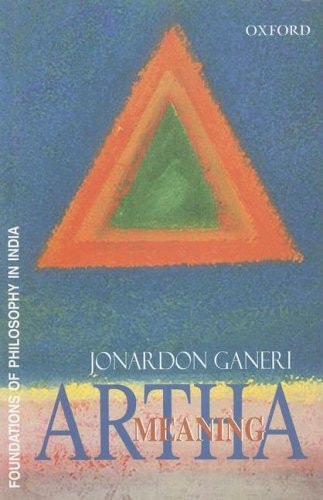
Artha: Meaning (Foundations of Philosophy in India)
0
0
As an Amazon Associate and affiliate partner, Menrva Books earns from qualifying purchases. Learn more
Author Description
This book examines the theories of meaning or artha. It discusses approaches in different schools of thought-Grammarian, Mimamsika, Buddhist, early Naiyayika, Navya Naiyayika, and Vedantin-highlighting the significant relationship between 'word' and 'meaning/knowing/ knowledge'. The author probes and explores the tension between tenets of the Navya-Nyaya school and elucidates on the important changes brought about by the introduction of modes of thought in the theory of meaning. An important contribution to the philosophy of language, this volume demonstrates that classical Indian theory of language can inform and be informed by contemporary philosophy.This book will interest students and scholars of philosophy, history, sociology, anthropology, and linguistics.
Menrva's Summary
THE THESIS
This book investigates the complex theories of meaning, or artha, within the diverse landscape of classical Indian philosophical traditions. Jonardon Ganeri, a scholar of Indian philosophy, utilizes historical texts and analytical frameworks to evaluate how various schools of thought—including the Grammarians, Mimamsikas, Buddhists, and Naiyayikas—conceptualized the relationship between language, cognition, and reality. The text argues that these classical Indian theories provide a robust intellectual foundation that remains relevant to contemporary debates in the philosophy of language.
THE SCOPE MAP
What You Will Find
- Comparative analysis of linguistic theories across Grammarian, Mimamsika, Buddhist, and Vedantin schools.
- Technical examination of the Navya-Nyaya school and its specific contributions to semantic theory.
- Exploration of the intersection between word, meaning, and knowledge.
- Synthesis of classical Indian thought with modern philosophical inquiry.
THE AUTHORITY PERSPECTIVE
Experts recognize this work as a significant contribution to the study of Indian philosophy of language, noting its ability to bridge ancient concepts with modern analytical methods. Readers frequently highlight the academic density of the prose, which serves as a foundational resource for scholars and advanced students in the field.
Page Count:
268
Publication Date:
2006-04-27
Publisher:
Oxford University Press
ISBN-10:
0195671996
ISBN-13:
9780195671995
History
Philosophy
Language
Indian philosophy
Linguistics
Community Tags
Similar Books