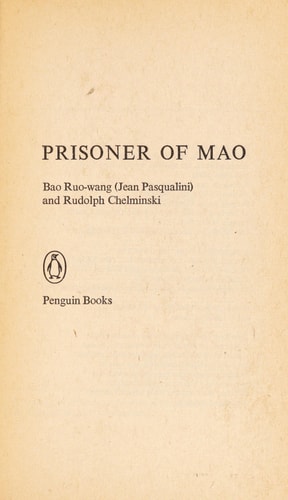
Prisoner of Mao
0
0
As an Amazon Associate and affiliate partner, Menrva Books earns from qualifying purchases. Learn more
Author Description
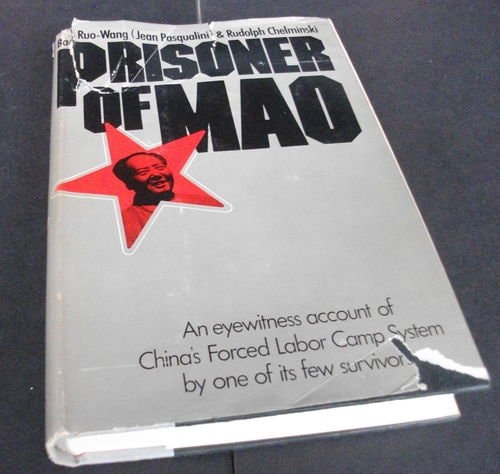
The ''Prisoner of Mao,'' is a harrowing account of life in China's vast apparatus of prisons and labor camps, describing how Chinese authorities used psychological techniques to coerce the innocent and the guilty into submission. It also revealed how thin the line between survival and starvation became during China's famine in the early 1960's. When the book was published in France in 1973, Mr. Pasqualini was denounced by many French supporters of China's revolution who refused to believe that the seemingly utopian nation of happy peasants and workers, as they then saw it, could have such a dark side. Only years later, after China's politically repressive regime relaxed slightly, releasing other prisoners and admitting its own excesses, did the criticism die away.
Menrva's Summary
THE THESIS
This work investigates the systemic use of psychological coercion and forced labor within the Chinese penal system during the mid-20th century. Bao Ruo-Wang, also known as Jean Pasqualini, utilizes his personal experience as a prisoner to document the mechanics of the Laogai system. The text argues that the state maintained control through a combination of physical deprivation and rigorous ideological re-education designed to break the individual will.
THE SCOPE MAP
What You Will Find
- Detailed accounts of the Chinese labor camp system during the 1960s.
- Analysis of psychological interrogation techniques used by authorities.
- First-hand observations of the Great Chinese Famine's impact on prison populations.
Scope Limits
- The narrative is confined to the author's specific experiences and observations within the camps.
- It does not provide a comprehensive academic history of the entire Chinese political structure of the era.
THE AUTHORITY PERSPECTIVE
Experts recognize this work as a foundational primary source for understanding the realities of the Chinese penal system during the Maoist era. Readers frequently note the stark, clinical tone the author employs to describe the brutal conditions he endured.
Page Count:
328
Publication Date:
1976-10-28
Publisher:
Penguin Books
ISBN-10:
0140041125
ISBN-13:
9780140041125
Biography
Memoir
History
China
YA Dystopian
Human rights
Criminology