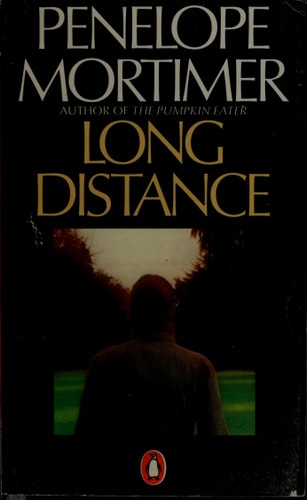
Long Distance
0
0
As an Amazon Associate and affiliate partner, Menrva Books earns from qualifying purchases. Learn more
Author Description
"Well, there's this place. I haven't started to explore it properly. Once I tried to make a map, but it was useless...."Uncharted then, at a long distance from the past or from the world once known (it is all a question of beginning again) Penelope Mortimer's novel, insidious at the outset, is increasingly baffling-- taking place under a cloud cover of dislocation. Where is she then--this anonymous woman (but a woman first which of course means last--many feminist themes are stated), who is "a blank slate, an empty glass,"--who is doomed to repeat experience until it is remembered--who will be doomed to delete experience which might betray any independence of spirit or show of feeling.At first in a world where time has been obliterated (there are no clocks) and where personal memories are vaguer than collective ones. To be sure other people come and go--the energetic, confident, masculine Gauleiter Gondzik (Gotzink, Gizdonk, Godzonk) or the housekeeper-jailer Mrs. April or a few for whom she cares--a dog, a crying baby, and the gentle Simon who spends time with her after she is demoted to the institutionalized West Wing where eventually there will be shock and drugs to teach her to conform.For a while this one world/no world seems to be a form of the collective unconscious; in time it ramifies to represent the automated, authoritarian sick society (intimations of Laing abound). "I don't understand." "No. That's the trouble." "You will. In the end." Perhaps. But even if you don't, Mrs. Mortimer's novel is extremely inductive and it contains some of the best writing she has ever committed to the page. To paraphrase Auden, it becomes real insofar as it reads us.- Kirkus, 1974
Menrva's Summary
THE PULSE
An anonymous woman finds herself trapped in a disorienting, clockless environment where she must navigate the erasure of her own identity and memory. The protagonist functions as a blank slate within an authoritarian institution, struggling to maintain a sense of self against the pressures of conformity imposed by figures like the jailer-housekeeper Mrs. April and the authoritative Gondzik. The narrative framework is surreal and non-linear, mirroring the protagonist's own fractured perception of time and reality as she is demoted from her initial state to the restrictive West Wing. She faces constant psychological manipulation, including the threat of shock therapy and drugs, designed to strip away her independence and force her into total compliance with the system.
INSIDE THE PAGES
- Surrealist atmosphere characterized by the absence of time and clocks
- Exploration of institutional control and the loss of individual autonomy
- Recurring themes of memory erasure and the struggle for self-definition
- Use of an anonymous, unreliable narrator to heighten the sense of dislocation
- Symbolic representation of an authoritarian, automated society
- Focus on feminist critiques of societal expectations and gender roles
- Episodic structure that reflects the protagonist's fragmented experience
- Stylistic emphasis on psychological interiority and existential dread
THE COLLECTIVE ECHO
Readers and critics frequently describe the novel as a challenging, atmospheric work that prioritizes psychological depth over traditional plot progression. Discussion often centers on the book's surrealist qualities and its biting critique of institutional power structures. Many observers highlight the author's precise, evocative prose as a primary strength that sustains the reader's interest despite the intentionally baffling narrative. The text is often analyzed for its feminist underpinnings and its depiction of the struggle to maintain an independent spirit within a conformist society. Readers who appreciate experimental fiction that explores the fragility of the human psyche will find this work particularly engaging.
Page Count:
176
Publication Date:
1977-01-01
Publisher:
Penguin Books Ltd
ISBN-10:
0140042946
ISBN-13:
9780140042948
Literary Fiction
Dystopian
Feminist
Surrealist
Psychological
Community Tags
Similar Books