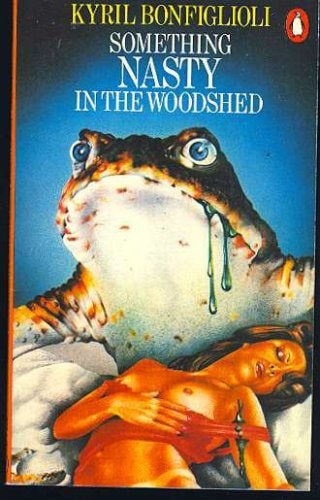
Something Nasty in the Woodshed
0
0
As an Amazon Associate and affiliate partner, Menrva Books earns from qualifying purchases. Learn more
Author Description
Life always seems to be more complicated than it should be for Charlie Mortdecai: degenerate aristocrat, amoral art dealer, seasoned epicurean, unwilling assassin, and confirmed coward.Something Nasty in the Woodshed finds Charlie exiled from London due to his growing unpopularity on account of some shady art deals. Taking refuge in a country estate on the Channel Island of Jersey, he embarks on a well-intended hedonistic interlude. But his vacation soon morphs into a macabre manhunt, as Charlie seeks to expose a local rapist whose modus operandi bears a striking resemblance to that of a warlock from ancient British mythology known as “The Beast of Jersey.”
Menrva's Summary
THE PULSE
Charlie Mortdecai, an amoral art dealer and aristocrat, finds his attempt at a quiet exile in Jersey interrupted by a series of gruesome crimes that force him into the role of an unwilling investigator. Seeking refuge from his mounting unpopularity in London, Mortdecai attempts to settle into a life of hedonistic leisure on the island of Jersey. His plans for a peaceful interlude are thwarted when he becomes entangled in a hunt for a local predator whose methods mirror those of a legendary mythological figure. The narrative is presented through the distinct, cynical, and often unreliable voice of Mortdecai, who navigates the social and physical landscape with a mixture of cowardice and opportunistic wit. He must contend with both the local authorities and the dangerous reality of his surroundings while maintaining his own precarious lifestyle.
INSIDE THE PAGES
- First-person unreliable narration
- Dark comedic tone and satirical social commentary
- Focus on the eccentricities of the British aristocracy
- Integration of local folklore and mythology
- Picaresque narrative structure
- Emphasis on culinary and aesthetic indulgences
- Exploration of moral ambiguity and criminal underworlds
- Setting-driven atmosphere on the island of Jersey
THE COLLECTIVE ECHO
Readers frequently highlight the sharp, sardonic wit of the protagonist as the primary draw of the series. Discussion often centers on the balance between the dark, macabre subject matter and the author's lighthearted, almost flippant prose style. Critics often note that the pacing is dictated more by Mortdecai's personal whims and observations than by traditional thriller mechanics. Many fans appreciate the character's unapologetic amorality, which distinguishes the work from standard detective fiction. The series is widely regarded for its unique voice and the specific, cynical perspective it offers on the art world and high society.
Page Count:
176
Publication Date:
1978-01-01
Publisher:
Penguin Books
ISBN-10:
014004597X
ISBN-13:
9780140045970
Crime
Mystery
Humor
Satire
British literature