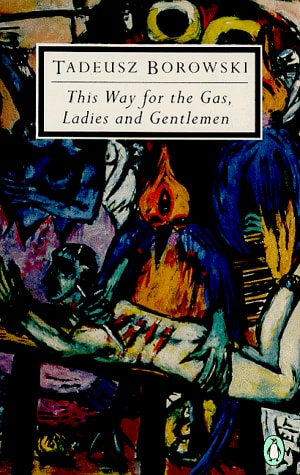
This Way for the Gas, Ladies and Gentlemen
0
0
As an Amazon Associate and affiliate partner, Menrva Books earns from qualifying purchases. Learn more
Author Description
180p paperback, cover rather worn, spine faded, pages clean, binding firm
Menrva's Summary
THE PULSE
A prisoner in the Auschwitz concentration camp navigates the brutal moral compromises required to survive the daily arrival of transport trains. Borowski presents a series of interconnected narratives centered on a protagonist who works as a prisoner-functionary within the camp system. The narrative framework utilizes a detached, clinical first-person perspective to document the dehumanizing logistics of the Holocaust. The protagonist must balance his own survival against the systematic destruction of others, operating within a world where traditional morality has been replaced by the immediate demands of hunger and fear. The prose maintains a stark, unadorned quality that reflects the mechanical nature of the environment.
INSIDE THE PAGES
- Clinical, detached narrative voice
- Interconnected short story structure
- Focus on the logistics of mass extermination
- Exploration of moral degradation under extreme duress
- Detailed depiction of camp hierarchy and prisoner labor
- Absence of sentimental or heroic tropes
- Emphasis on the physical reality of starvation and disease
- Examination of the psychological impact of complicity
THE COLLECTIVE ECHO
Readers and critics frequently highlight the unsettling, matter-of-fact tone that Borowski employs to describe horrific events. Discussion often centers on the author's refusal to offer redemption or moral clarity, which forces the reader to confront the reality of survival in a death camp. Many observers note that the book serves as a powerful critique of how systems of oppression force victims to participate in their own degradation. The pacing is deliberate and relentless, mirroring the repetitive, soul-crushing routine of the camp environment. This work remains a significant contribution to literature regarding the Holocaust because it avoids the common pitfalls of romanticizing or mythologizing the experience of the prisoners.
Page Count:
192
Publication Date:
1976-02-28
Publisher:
Penguin
ISBN-10:
0140041141
ISBN-13:
9780140041149
Memoir
Fiction
Historical
Holocaust
Short Stories
Reference
War
Foreign Study
20th Century