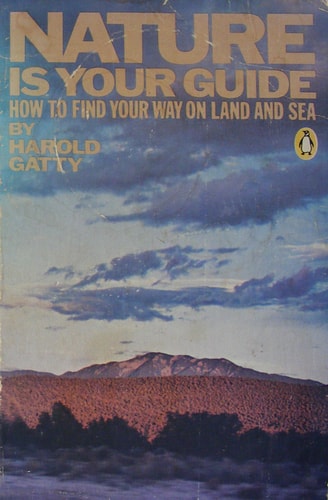
Nature Is Your Guide: How to Find Your Way on Land and Sea by Observing Nature
0
0
As an Amazon Associate and affiliate partner, Menrva Books earns from qualifying purchases. Learn more
Author Description
During his remarkable lifetime, Harold Gatty became one of the world's great navigators (in 1931, he and Wiley Post flew around the world in a record-breaking eight days) and, to the benefit of posterity, recorded in this book much of his accumulated knowledge about pathfinding both on land and at sea.Applying methods used by primitive peoples and early explorers, the author shows how to determine location, study wind directions and reflections in the sky, even how to use the senses of smell and hearing to find your way in the wilderness, in a desert, in snow-covered areas, and on the ocean. By observing birds and other animals, weather patterns, vegetation, shifting sands, patterns of snow fields, and the positions of the sun, moon, and stars, would-be explorers can learn to estimate distances and find their way without having to rely on a map or a compass.The wealth of valuable data and advice in this volume — much of it unavailable elsewhere — makes it indispensable for hikers, bikers, scouts, sailors, and outdoorsmen — all those who might find themselves stranded or lost in an unfamiliar area. Through careful study of this book and its lessons, pathfinders can learn to interpret signs in the natural world to find their way in almost any kind of terrain.
Menrva's Summary
THE THESIS
This book investigates the methodology of natural navigation, questioning how individuals can determine their location and direction without reliance on modern technological tools like maps or compasses. Harold Gatty, a record-breaking aviator and navigator, synthesizes his extensive experience and the traditional techniques of early explorers and indigenous peoples. He presents a comprehensive framework for interpreting environmental cues, including celestial bodies, weather patterns, and biological indicators, to facilitate orientation in diverse terrains.
THE SCOPE MAP
What You Will Find
- Techniques for interpreting wind, cloud formations, and sky reflections.
- Methods for utilizing animal behavior, vegetation patterns, and geological features for orientation.
- Strategies for navigation across deserts, snow-covered landscapes, and open oceans.
- Practical applications of sensory observation, including sound and smell, to detect environmental changes.
Scope Limits
- The text does not provide instructions for modern electronic GPS or digital navigation systems.
- It does not cover survival medicine or emergency first aid procedures.
THE AUTHORITY PERSPECTIVE
Experts and outdoor enthusiasts frequently cite this work as a foundational text for understanding traditional pathfinding techniques. Readers often note the practical density of the observations, which require significant field practice to master effectively.
Page Count:
271
Publication Date:
1979-03-29
Publisher:
Penguin Books
ISBN-10:
0140050760
ISBN-13:
9780140050769
Nature
Outdoor Skills
Reference
Navigation
Survival
Community Tags
Similar Books