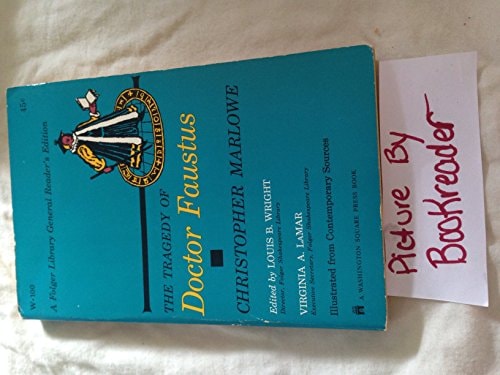
Doctor Faustus (The Fountainwell drama texts ; 26)
0
0
As an Amazon Associate and affiliate partner, Menrva Books earns from qualifying purchases. Learn more
Author Description
The Tragical History of the Life and Death of Doctor Faustus, commonly referred to simply as Doctor Faustus, is an Elizabethan tragedy by Christopher Marlowe, based on German stories about the title character Faust, that was first performed sometime between 1588 and Marlowe's death in 1593. Two different versions of the play were published in the Jacobean era, several years later. The powerful effect of early productions of the play is indicated by the legends that quickly accrued around them—that actual devils once appeared on the stage during a performance, "to the great amazement of both the actors and spectators", a sight that was said to have driven some spectators mad.
Menrva's Summary
THE PULSE
A scholar sells his soul to the devil in exchange for limitless knowledge and worldly power, only to face the inevitable consequences of his pact. Doctor Faustus, a brilliant but dissatisfied academic, rejects traditional fields of study in favor of necromancy. He summons the demon Mephistopheles to strike a bargain with Lucifer, trading his eternal soul for twenty-four years of absolute authority and magical ability. The narrative follows his descent as he uses these powers for trivial amusements and grand displays, while the looming deadline of his damnation creates a constant, underlying tension. The play utilizes a dramatic structure that blends high-stakes theological debate with slapstick comedy, reflecting the moral instability of the protagonist.
INSIDE THE PAGES
- Use of the morality play tradition to explore human ambition
- Soliloquies that reveal the internal conflict between pride and repentance
- The presence of the Good Angel and Evil Angel as externalized conscience
- A non-linear progression of episodic magical feats
- The juxtaposition of cosmic horror with low-brow comic relief
- The use of blank verse and prose to distinguish between character classes
- A focus on the psychological toll of isolation and hubris
- The inclusion of supernatural entities as active participants in the plot
THE COLLECTIVE ECHO
Discussion often centers on the play's ambiguous tone, which oscillates between a serious theological warning and a cynical exploration of human desire. Readers frequently highlight the effectiveness of the protagonist's final soliloquy as a representation of existential dread and the finality of his choice. Critics often debate the authorship of the comic scenes, questioning whether they dilute the gravity of the central tragedy or serve as a necessary contrast to Faustus's intellectual arrogance. The work remains a foundational text for understanding the transition from medieval morality structures to Renaissance humanism. Scholars and audiences alike continue to analyze how the play reflects the anxieties of the Elizabethan era regarding forbidden knowledge and religious orthodoxy.
Page Count:
119
Publication Date:
1973-01-01
Publisher:
Oliver and Boyd
ISBN-10:
0050027662
ISBN-13:
9780050027653
Fantasy
Drama
classic
Tragedy
Dramas & Plays
Drama
New Used & Rental Textbooks
Occult
Faust
Elizabethan
Community Tags
Similar Books