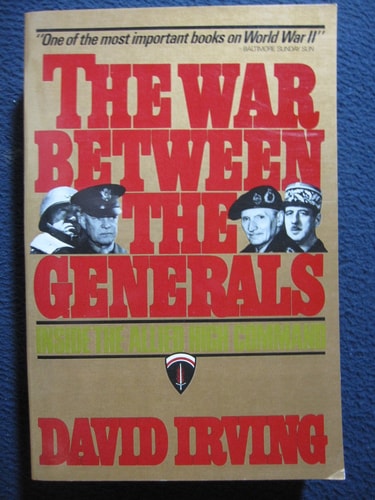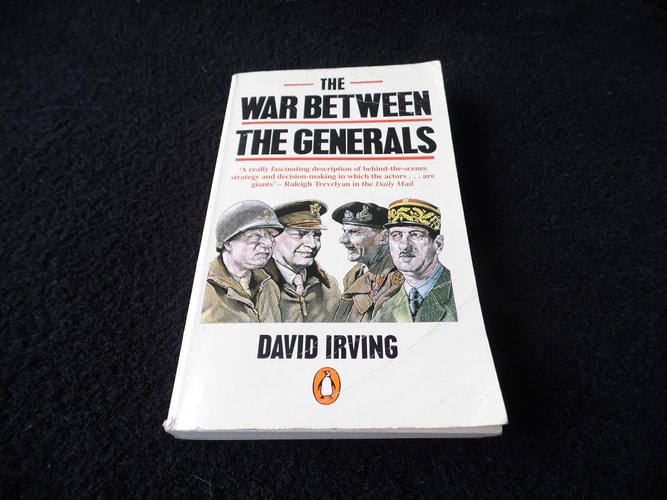
The War between the Generals
0
0
As an Amazon Associate and affiliate partner, Menrva Books earns from qualifying purchases. Learn more
Author Description
This is one of the great untold stories of our time - that of the little band of generals entrusted with a historic task: invading and liberating Nazi-occupied Europe. They were supposed to be fighting the Germans, but some of their fiercest battles were fought against each other. At the center was the Supreme Commander himself, Dwight D. Eisenhower - sincere, indecisive, desperate to hold the Alliance together. Against him was Field-Marshal Bernard Montgomery, who strove ceaselessly to gain authority. Cavilling against them both were the others - the outrageous Patton, the dogged Bradley, the bomber barons like Spaatz, Vandenberg, and Butcher Harris, and Trafford Leigh-Mallory. After the war, there was a cover-up. Not until David Irving began his research did the full truth emerge. Among his unexpected discoveries was the wickedly candid diary of the obscure general who was Eisenhower s eyes and ears. Through this and other private accounts we see the war as the generals lived it - squabbling over perks and preferences, taking their mistresses with them on to the battlefield, and there are revelations about General Patton that will amaze. There are other surprises - General de Gaulle s use of torture upon his fellow Frenchmen is one, and a clear attempt by the Allies to get rid of him is another. This book is a history of command. It shows how the ambitions and personalities of the men at the top affect the course of a war and the lives of the ordinary mortals in the field.
Menrva's Summary
THE THESIS
This work investigates the internal power struggles and interpersonal conflicts among the Allied high command during the liberation of Europe in World War II. David Irving utilizes private diaries, personal correspondence, and previously unexamined military records to argue that the strategic direction of the war was frequently compromised by the competing egos, ambitions, and personal animosities of the commanding generals. The text posits that the veneer of Allied unity masked a chaotic environment of professional rivalry and administrative dysfunction.
THE SCOPE MAP
What You Will Find
- Analysis of the command dynamics between Dwight D. Eisenhower, Bernard Montgomery, George Patton, and Omar Bradley.
- Examination of the logistical and strategic disagreements regarding the invasion of Nazi-occupied Europe.
- Utilization of private diaries and internal military communications to reconstruct high-level decision-making processes.
Scope Limits
- The narrative focuses primarily on the interpersonal conflicts of the Allied leadership rather than providing a comprehensive tactical history of specific battlefield engagements.
- The analysis is heavily filtered through the author's interpretation of private accounts and personal records.
THE AUTHORITY PERSPECTIVE
Critics and historians often note the provocative nature of the author's claims and his reliance on specific, controversial source materials. Readers frequently highlight the book's focus on the human failings of military leaders, though the work remains a subject of debate regarding its historical objectivity and interpretation of command decisions.
Page Count:
446
Publication Date:
1982-01-01
Publisher:
Penguin
ISBN-10:
0140055347
ISBN-13:
9780140055344
Biography
History
Military History
Political History
Military
World War