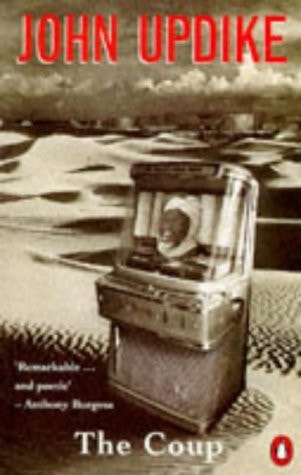
The Coup
0
0
As an Amazon Associate and affiliate partner, Menrva Books earns from qualifying purchases. Learn more
Author Description
John Updike is one of America's most versatile men of letters. His characterization of Rabbit Angstrom in RABBIT RUN, RABBIT REDUX and RABBIT IS RICH has made the author richer than Rabbit.But in THE COUP, Updike dissects a modern African state called Kush. Narrated tongue-in-cheek by Kush's exiled president, Colonel Felix Ellellou, Updike proves he is an equal opportunity employer when it comes to slicing up bunkum, whether black or white, first world or third.
Menrva's Summary
THE PULSE
Colonel Felix Ellellou, the exiled president of the fictional African nation of Kush, recounts the political and personal collapse of his regime. As he navigates the intersection of traditional tribal loyalties, Marxist ideology, and the encroaching influence of Western consumerism, Ellellou attempts to maintain his grip on power while grappling with his own internal contradictions. The narrative framework utilizes a first-person perspective, allowing the protagonist to offer a cynical, often biting commentary on the absurdity of governance and the clash of global cultures. His objective is to preserve the identity of his nation against both internal dissent and external pressures, though his methods frequently undermine his stated goals.
INSIDE THE PAGES
- First-person unreliable narrator
- Satirical examination of postcolonial politics
- Exploration of the clash between traditional and modern values
- Use of irony and dark humor to critique global power structures
- Detailed character study of a flawed political leader
- Episodic narrative structure reflecting the instability of the state
- Commentary on the influence of foreign aid and ideology
- Linguistic playfulness and stylistic experimentation
THE COLLECTIVE ECHO
Discussion often centers on the author's ambitious attempt to inhabit a perspective far removed from his usual suburban American settings. Readers frequently highlight the dense, ornate prose style that characterizes the protagonist's voice throughout the narrative. Critics often debate the effectiveness of the satire, noting the balance between the author's intellectual critique of political systems and the specific character development of Ellellou. Many readers find the pacing to be deliberate and reflective, focusing more on the philosophical implications of the protagonist's actions than on traditional plot progression. The work remains a subject of interest for those examining how mid-century writers engaged with the complexities of the postcolonial era.
Page Count:
256
Publication Date:
1980-01-01
Publisher:
Penguin Books
ISBN-10:
0140052003
ISBN-13:
9780140052008
Literary Fiction
Satire
Political
Postcolonial
Classics
Genre Fiction
Political fiction
Literary