John Dee's Library Catalogue
0
0
As an Amazon Associate and affiliate partner, Menrva Books earns from qualifying purchases. Learn more
Author Description
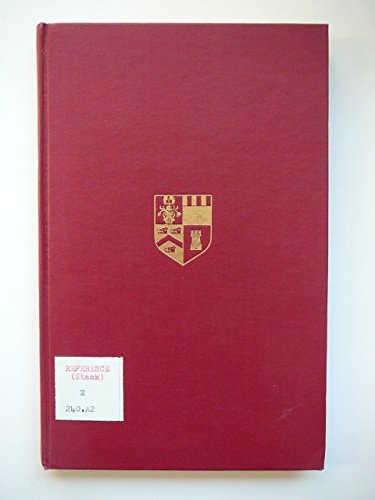
John Dee (1527-1609) has emerged as one of the most influential figures in the intellectual history of Tudor England. Though best known in his own time as a mathematician, he had a host of other interests (including navigation, astrology and astronomy, cabbala, alchemy, paracelsian medicine, and Welsh history) and was one of the first scholars to advocate collecting manuscripts from the dissolved monastic libraries. Indeed his own library was perhaps the largest assembled in England by one man before 1600. This study, which includes a facsimile of the detailed catalogue of 1583, recounts for the first time the growth of Dee's library, the raid made upon it during his absence in Poland, and its dispersal after his death. The book also describes the location of his surviving books and manuscripts.
Menrva's Summary
THE THESIS
This work investigates the composition, historical significance, and eventual dispersal of the extensive personal library belonging to the Elizabethan polymath John Dee. Authors Andrew G. Watson and Julian Roberts utilize primary archival evidence and a facsimile of the 1583 catalogue to reconstruct the intellectual environment of Tudor England. By documenting the acquisition and subsequent loss of these volumes, the authors provide a framework for understanding the intersection of Renaissance scholarship, occultism, and early modern book collecting.
THE SCOPE MAP
What You Will Find
- A complete facsimile of the 1583 catalogue of John Dee's library.
- Historical analysis of the growth and eventual dispersal of the collection after 1609.
- Documentation regarding the raid on Dee's library during his tenure in Poland.
- A census of the surviving books and manuscripts currently located in various repositories.
THE AUTHORITY PERSPECTIVE
Scholars and bibliographers regard this volume as the definitive reference for the study of John Dee's intellectual life. Readers frequently note the meticulous academic density of the prose and the value of the primary source material provided.
Page Count:
440
Publication Date:
1990-01-01
Publisher:
Oxford University Press
ISBN-10:
0197217958
ISBN-13:
9780197217955
Biography
History
Intellectual History
Rare Books
Reference
Bibliography
Tudor England
Community Tags
Similar Books