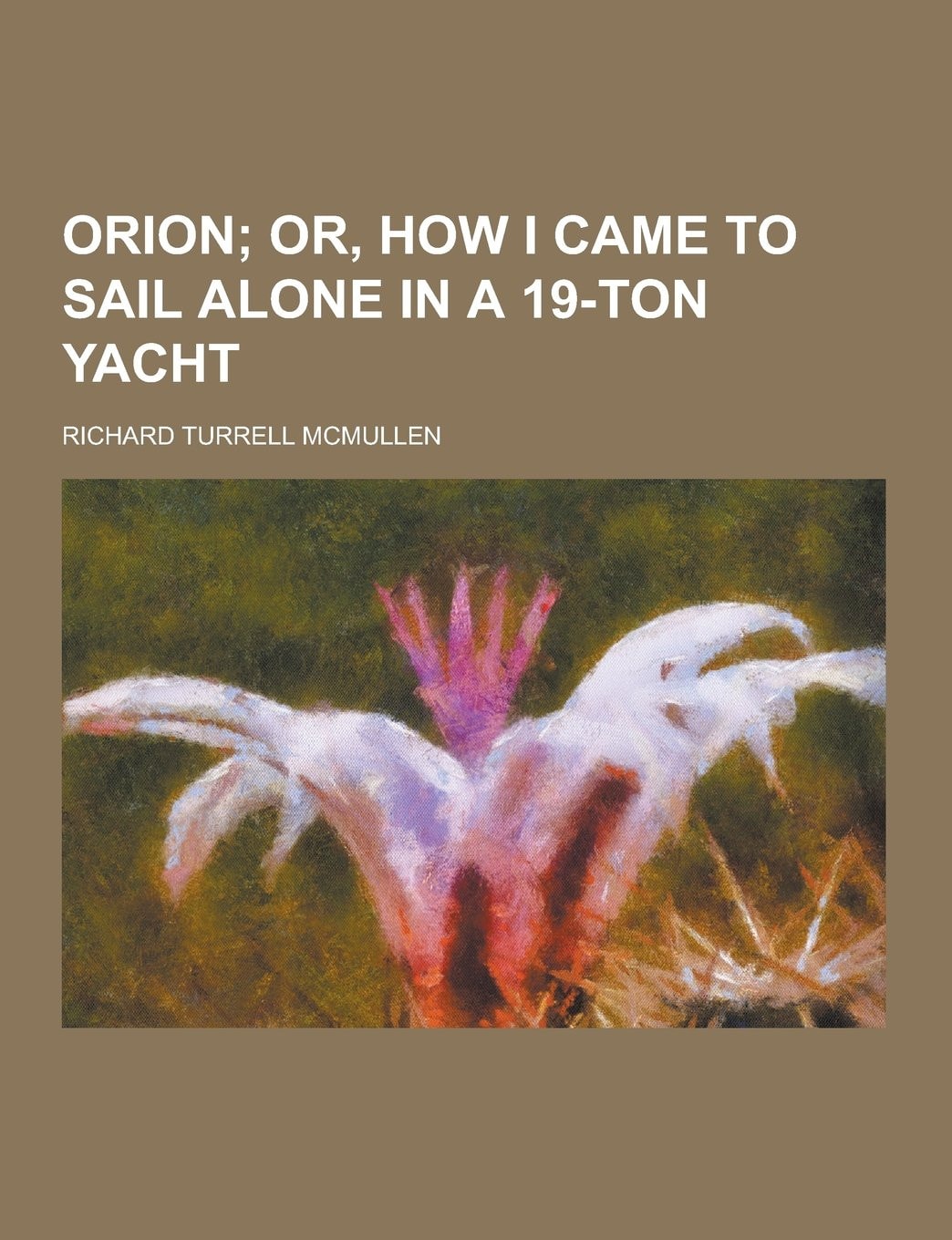
Orion
0
0
As an Amazon Associate and affiliate partner, Menrva Books earns from qualifying purchases. Learn more
Author Description
This historic book may have numerous typos and missing text. Purchasers can usually download a free scanned copy of the original book (without typos) from the publisher. Not indexed. Not illustrated. 1878 edition. Excerpt:... of the Trinity House'. but their work, like most things in the world, is capable of advance. The suggested amendments of the Rule of the Road at Sea, with regard to the Collision clauses, is only a better adaptation of the Rules already in force, and is perfectly simple. They could be put in force immediately; could be acted upon by one vessel as a beginning, with advantage to that vessel and to all that came near her; also there is no need to wait for the assent of other nations. If our shipowners were compelled by Order in Council to act upon my suggestions to-morrow, they would not only benefit themselves, but all whose vessels approached them; without raising a doubt or creating confusion in the minds of any. I have read, on page 23 of "Observations on the Rule of the Road at Sea," a book recently published (in his unofficial capacity) by the author of the "Rules in Rhyme," too late to notice in its proper place, under the head of Collisions at Sea, that the writer expects to see the day when large steamers will not be compelled by law to give way to smacks, luggers, and barges. Now, inasmuch as these vessels, which represent an immense and important home-trade, are dependent upon wind for their motive power, it happens mostly that they could not get out of the way of a steamer even if they had an indication beforehand on which side the steamer desired to pass; so that steamers must, as at present, either be put to the inconvenience of losing a minute by stopping, or they must deliberately drown the crews of these small vessels. The general impression has hitherto prevailed that everyone had equal rights on the Queen's highway, and that the lives of smacksmen were more valued by the nation than the saving of a few minutes of time to...
Menrva's Summary
THE THESIS
This book investigates the historical context and proposed advancements for maritime collision avoidance rules, specifically focusing on the 'Rule of the Road at Sea'. The author, drawing on existing regulations and recent publications, argues for immediate implementation of suggested amendments to collision clauses, asserting their simplicity and the potential for immediate benefit to all vessels. The text highlights the inherent difficulties faced by wind-powered vessels in yielding to steamers and critiques the prevailing notion of equal rights on the sea when it conflicts with the safety of smaller craft.
THE SCOPE MAP
- Historical analysis of maritime collision regulations, particularly the 'Rule of the Road at Sea'.
- Discussion of proposed amendments to collision clauses and their practical implementation.
- Examination of the challenges faced by wind-powered vessels in relation to steam-powered vessels.
- Critique of the concept of equal rights at sea in the context of maritime safety.
- Analysis of the Trinity House's role and work in maritime safety.
- Consideration of international assent for rule changes.
THE AUTHORITY PERSPECTIVE
This work appears to be a historical analysis of maritime law and safety regulations from the late 19th century. The excerpt suggests a detailed examination of specific rules and their practical implications for different types of vessels. The author's direct engagement with contemporary publications and their clear advocacy for specific rule changes indicate a focused, argumentative approach aimed at influencing maritime practice.
Page Count:
44
Publication Date:
2013-09-01
Publisher:
General Books
ISBN-10:
1230206094
ISBN-13:
9781230206097
Non-Fiction
History
Naval history
Transportation
Maritime law
Community Tags
Similar Books