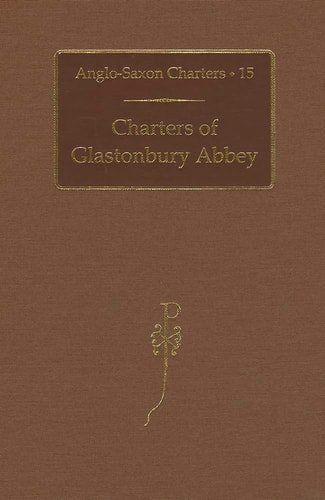
Charters of Glastonbury Abbey
0
0
As an Amazon Associate and affiliate partner, Menrva Books earns from qualifying purchases. Learn more
Author Description
Glastonbury Abbey was the wealthiest and most influential monastery in later Anglo-Saxon England. It was a noted centre of scholarship, and claimed ancient origins which were later extravagantly embellished to link the house with such luminaries as St Patrick, St David and King Arthur. The historiographical evidence for Glastonbury is particularly challenging, because the accounts of the monastery's early history were revised and interpolated over centuries, as the legends grew. There are also complications in the study of its archive: the manuscripts are mostly late and corrupt, and the whole is overshadowed by the contents list of a lost cartulary (the Liber Terrarum), which included many more early charters than now survive. The present volume is the first critical edition of the sixty-one surviving charters from the abbey's pre-Conquest archive, which date from the later seventh century to the reign of Cnut. The texts are edited to a high standard, with comprehensive commentaries that include translation and elucidation of the Old English boundary clauses, and authoritative assessments of authenticity. There is a long introduction with analysis and synthesis of the documentary evidence for Glastonbury's history in the Anglo-Saxon period and for the accumulation of its endowment, including a section on William of Malmesbury's works on Glastonbury. The volume concludes with a series of appendixes which present all the evidence for the lost charters in the Liber Terrarum and in other sources.
Menrva's Summary
THE THESIS
This volume investigates the documentary history and administrative evolution of Glastonbury Abbey by providing a critical edition of its surviving pre-Conquest charters. S. E. Kelly, a specialist in Anglo-Saxon diplomatic, addresses the historiographical challenges posed by the monastery's tendency to revise and interpolate its own records over several centuries. By analyzing sixty-one surviving charters alongside the evidence of the lost Liber Terrarum, the author establishes a rigorous framework for evaluating the authenticity of the abbey's land grants and historical claims from the seventh century through the reign of Cnut.
THE SCOPE MAP
What You Will Find
- A critical edition of sixty-one surviving pre-Conquest charters from Glastonbury Abbey.
- Detailed translations and linguistic analysis of Old English boundary clauses.
- Comprehensive assessment of the historiographical impact of William of Malmesbury on the abbey's records.
- Extensive appendixes documenting the evidence for lost charters and archival materials.
THE AUTHORITY PERSPECTIVE
Scholars and historians regard this volume as a foundational reference for the study of Anglo-Saxon monastic archives and land tenure. The text is noted for its academic density and the meticulous nature of its editorial commentary, making it a primary resource for researchers specializing in medieval ecclesiastical history.
Page Count:
380
Publication Date:
2012-11-17
Publisher:
British Academy
ISBN-10:
0197265073
ISBN-13:
9780197265079
History
Academic
Reference
British History
Community Tags
Similar Books