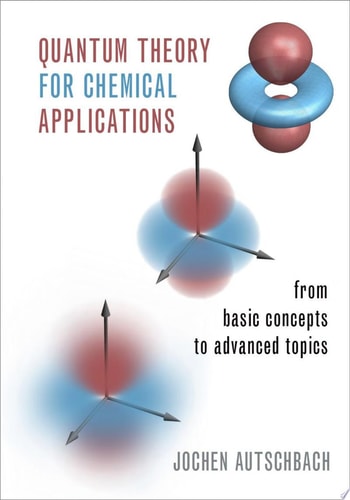
Quantum Theory for Chemical Applications: From Basic Concepts to Advanced Topics
0
0
As an Amazon Associate and affiliate partner, Menrva Books earns from qualifying purchases. Learn more
Author Description
Quantum theory and computational chemistry have become integral to the fields of chemistry, chemical engineering, and materials chemistry. Concepts of chemical bonding, band structure, material properties, and interactions between light and matter at the molecular scale tend to be expressed in the framework of orbital theory, even when numerical calculations go beyond simple orbital models. Yet, the connections between these theoretical models and experimental observations are often unclear. It is important--now more than ever--that students master quantum theory if they are going to apply chemical concepts. In this book, Jochen Autschbach connects the abstract with the concrete in an elegant way, creating a guiding text for scholars and students alike. Quantum Theory for Chemical Applications covers the quantum theory of atoms, molecules, and extended periodic systems. Autschbach goes beyond standard textbooks by connecting the molecular and band structure perspectives, covering response theory, and more. The book is broken into four parts: Basic Theoretical Concepts; Atomic, Molecular, and Crystal Orbitals; Further Basic Concepts of Quantum Theory; and Advanced Topics, such as relativistic quantum chemistry and molecule-light interactions. The foresight Autschbach provides is immense, and he sets up a solid theoretical background for nearly every quantum chemistry method used in contemporary research. Because quantum theory tells us what the electrons do in atoms, molecules, and extended systems, the pages in this book are full of answers to questions both long-held and never-before considered.
Menrva's Summary
THE THESIS
This book investigates the fundamental connection between abstract quantum theory and its practical application in chemical research, materials science, and molecular modeling. Jochen Autschbach, a professor of chemistry, utilizes his expertise to bridge the gap between theoretical orbital models and experimental observations. The text provides a rigorous framework for understanding how electrons behave in atoms, molecules, and extended periodic systems, ensuring students can apply these concepts to contemporary research methods.
THE SCOPE MAP
What You Will Find
- Comprehensive coverage of atomic, molecular, and crystal orbitals.
- Theoretical foundations for response theory and relativistic quantum chemistry.
- Analysis of light-matter interactions at the molecular scale.
- A structured four-part pedagogical approach moving from basic concepts to advanced research topics.
THE AUTHORITY PERSPECTIVE
Experts recognize this text as a robust resource for bridging the divide between standard textbook theory and modern computational chemistry applications. Readers frequently note the academic density of the prose, which serves as a foundational reference for advanced students and researchers in the field.
Page Count:
754
Publication Date:
2020-01-01
Publisher:
Oxford University Press
ISBN-10:
0197508340
ISBN-13:
9780197508343
Science
Chemistry
Earth Sciences
Physics
Analytical Chemistry
Physical Chemistry
textbook
Community Tags
Similar Books