Populism and Civil Society: The Challenge to Constitutional Democracy
0
0
As an Amazon Associate and affiliate partner, Menrva Books earns from qualifying purchases. Learn more
Author Description
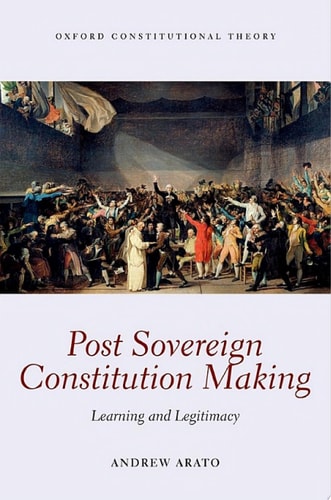
From the co-authors of the classic Civil Society and Political Theory, Populism and Civil Society offers an empirically informed, systematic theoretical analysis of the political challenges posed by contemporary populism to constitutional democracies.Populism and Civil Society provides a political assessment and critical theory of the significance of what is now a global phenomenon: the growing populist challenge to constitutional democracy. Andrew Arato and Jean L. Cohen examine the challenge it presents in terms of its four main organizational forms: socio-political movement, political party, government, and regime. They focus in particular on the tense relationship of populism to democracy and of populism to constitutionalism. Without presupposing the authoritarian logic of the phenomenon in the definition, the book demonstrates it through the reconstruction of the main elements used by advocates to identify populism. To be sure, the authoritarian logic of populism is not realized in every instance of it, and the book analyses why this is so. Across modern history, many populist governments have in fact been "hybrid" regimes, blending authoritarian elements and residual democratic forms. Populism on its own, however, is a form of abusive or instrumental "constitutionalism" that typically relies on the alleged permanence of the quasi-revolutionary constituent power. The book concludes by outlining a non- and anti-populist project of democratization and social justice, distinguishing between the "popular" and the "populist" and offering a program that is nourished by the plurality of democracies and which rescues some of left populism's more benevolent "host ideologies."
Menrva's Summary
THE THESIS
This book investigates the structural and theoretical challenges that contemporary populist movements pose to the stability and integrity of constitutional democracies. Authors Andrew Arato and Jean L. Cohen utilize their extensive backgrounds in political theory to construct a systematic analysis of populism as a global phenomenon. By examining the movement across its various organizational forms—from political parties to established regimes—the authors argue that populism often functions as a form of instrumental constitutionalism that threatens democratic norms. The text provides a rigorous framework for distinguishing between legitimate popular representation and the authoritarian logic inherent in populist governance.
THE SCOPE MAP
What You Will Find
- A four-part organizational framework analyzing populism as a movement, party, government, and regime.
- A critical assessment of the relationship between populism, constitutionalism, and democratic institutions.
- An analysis of hybrid regimes that blend authoritarian practices with residual democratic structures.
- A proposed project for democratization and social justice that contrasts popular sovereignty with populist ideology.
THE AUTHORITY PERSPECTIVE
Scholars and political analysts recognize this work as a significant contribution to the study of modern democratic erosion. Readers frequently note the high level of theoretical density and the authors' meticulous reconstruction of populist logic, making it a primary resource for those studying the intersection of civil society and constitutional governance.
Page Count:
320
Publication Date:
2021-01-01
Publisher:
Oxford University Press
ISBN-10:
0197526616
ISBN-13:
9780197526613
Political Theory
Sociology
Comparative Politics
Constitutional Law
Democracy
Community Tags
Similar Books