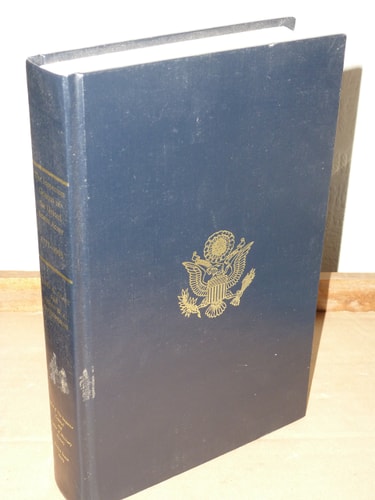
The Future of Drones in America: Law Enforcement and Privacy Considerations: Hearing Before the Committee on the Judiciary, United States Senate, One Hundred Thirteenth Congress, First Session, March 20, 2013
0
0
As an Amazon Associate and affiliate partner, Menrva Books earns from qualifying purchases. Learn more
Author Description
Recently the debate about the use of unmanned aerial vehicles, or "drones," has largely focused on the lethal targeting of suspected terrorists, including Americans. I am convinced that the domestic use of drones to conduct surveillance and collect other information will have a broad and significant impact on the everyday lives of millions of Americans. Just in the last decade, technological advancements have revolutionized aviation to make this technology cheaper and more readily available. As a result, many law enforcement agencies, private companies, and individuals have expressed interest in operating drones in our national airspace. Drones are able to carry out arduous and dangerous tasks that would otherwise be expensive or difficult for a human to undertake. For example, in addition to law enforcement surveillance, drones will potentially be used for scientific experiments, agricultural research, geological surveying, pipeline maintenance, and search-and-rescue operations. Before we allow widespread use of drones in the domestic airspace, we have to carefully consider the impact on the privacy rights of Americans.
Menrva's Summary
THE THESIS
The proliferation of drone technology presents a critical juncture for American law enforcement and the protection of individual privacy. As drones become more affordable and accessible, their potential applications in domestic surveillance and information gathering are expanding rapidly, necessitating a thorough examination of their impact on the daily lives of citizens. This hearing addresses the dual nature of drones: their capacity to perform difficult tasks and aid in various sectors, contrasted with the significant privacy concerns they raise for Americans.
THE SCOPE MAP
- An examination of the technological advancements making drones more accessible.
- Discussion on the potential applications of drones in law enforcement and other sectors (e.g., scientific research, agriculture, search-and-rescue).
- Consideration of the privacy implications of widespread domestic drone surveillance.
- Analysis of the impact on the everyday lives of millions of Americans.
- Legislative and policy considerations for the domestic use of drones.
THE AUTHORITY PERSPECTIVE
This transcript from a 2013 Senate Judiciary Committee hearing directly addresses the emerging issues surrounding drone technology in the United States. The discussion highlights the rapid advancements in drone capabilities and their increasing availability to law enforcement and private entities. It frames the central conflict between the potential benefits of drones for public safety and efficiency and the significant concerns regarding the privacy rights of American citizens. The material suggests a focus on policy and legal frameworks needed to navigate this evolving technological landscape.
Page Count:
104
Publication Date:
2013-01-01
Publisher:
U.S. Government Printing Office
ISBN-10:
1494866935
ISBN-13:
9781494866938
Non-Fiction
Technology
Privacy
Law Enforcement
Surveillance
Government
Community Tags
Similar Books