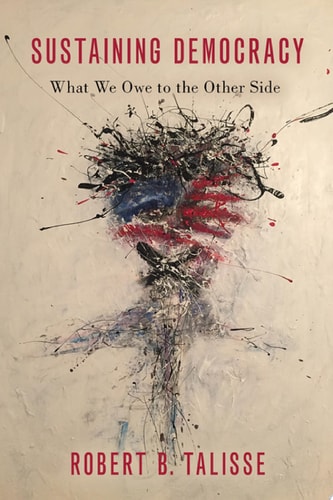
Sustaining Democracy: What We Owe to the Other Side
0
0
As an Amazon Associate and affiliate partner, Menrva Books earns from qualifying purchases. Learn more
Author Description
Cover -- Half-title -- Title -- Copyright -- Contents -- Preface -- Acknowledgments -- Introduction: The Big Picture -- 1. Common Ground And Its Erosion -- 2. Is Democracy Self-.defeating? -- 3. Sustaining Democracy And Overdoing Democracy -- 4. Final Preliminaries -- 1. Democracy As A Society Of Equals -- 1. Democracy As A Moral Idea -- 2. Democracy As An Ethos -- 2.1. Duties Of Citizenship -- 2.2. Virtues Of Citizenship -- 2.3. Fitting The Pieces Together -- 3. Democracy As A Practical Ideal -- 4. The Generality Of The Account -- 2. Why Sustain Democracy? 1. Seeing The Dilemma From The Inside -- 2. Persistent Political Disagreement -- 2.1. Good-.faith Political Disagreement -- 2.2. Limits To Good-.faith Political Disagreement -- 2.3. The Dilemma Restated -- 3. The Burden Of Citizenship -- 4. Addressing The Citizen -- 3. The Polarization Dynamic -- 1. Political Polarization -- 1.1. Three Sites Of Political Polarization -- 1.2. The Three Sites As Mutually Reinforcing -- 2. Belief Polarization -- 2.1. Examples Of Belief Polarization -- 2.2. Thinking In Groups -- 2.3. How Belief Polarization Works -- 2.4. Belief Polarization And The Stadium 2.5. Polarization As A Dynamic -- 3. Polarization Among Allies -- 3.1. Love Your Political Enemies? -- 3.2. Fractured Allegiances -- 4. The Dilemma Resolved: Why Sustain Democracy -- 4. How Can We Sustain Democracy? -- 1. The Depth Of Political Identity -- 1.1. Some Experimental Findings -- 1.2. Political Identity As A Way Of Seeing The World -- 2. The Facilitated Democracy Approach -- 3. How To Sustain Democracy -- 3.1. What Sustaining Democracy Does Not Require -- 3.2. Sustaining Democracy Within -- 3.3. The Importance Of Political Distance -- 4. Conclusion Epilogue: Living Together As Equals -- Notes -- Works Cited -- Index Robert B. Talisse. Electronic Reproduction. Oxford Available Via World Wide Web.
Menrva's Summary
THE THESIS
This book investigates the core question of how democratic societies can maintain stability and mutual respect in the face of intense, persistent political polarization. Robert B. Talisse, a professor of philosophy and political science, utilizes a framework rooted in democratic theory and social psychology to argue that democracy is not merely a set of institutions but a moral ethos requiring specific civic virtues. He posits that citizens have a fundamental duty to engage with political disagreement as a necessary condition for a functioning society of equals.
THE SCOPE MAP
What You Will Find
- An analysis of the mechanics of belief polarization and how group dynamics reinforce political divides.
- A philosophical framework defining democracy as both a moral ideal and a practical, everyday ethos.
- Evidence drawn from experimental findings in social psychology regarding political identity and group behavior.
- Practical strategies for sustaining democratic engagement while maintaining necessary political distance.
THE AUTHORITY PERSPECTIVE
Experts and political theorists highlight this work as a rigorous, accessible contribution to the study of contemporary democratic erosion. Readers frequently note the clarity of the author's philosophical arguments, which provide a structured approach to understanding the duties of citizenship in a fractured political landscape.
Page Count:
178
Publication Date:
2021-01-01
Publisher:
Oxford University Press
ISBN-10:
0197556477
ISBN-13:
9780197556474
Philosophy
Sociology
Democracy
Citizenship
Civics
Community Tags
Similar Books