Defending Democracies: Combating Foreign Election Interference in a Digital Age
0
0
As an Amazon Associate and affiliate partner, Menrva Books earns from qualifying purchases. Learn more
Author Description
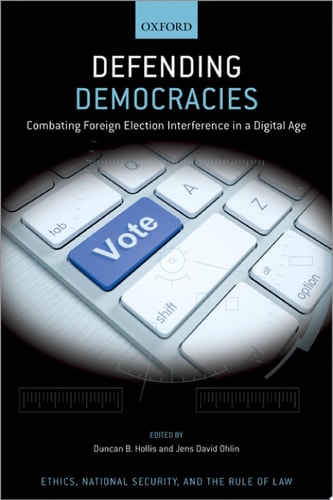
Election interference is one of the most widely discussed international phenomena of the last five years. Russian covert interference in the 2016 U.S. Presidential Election elevated the topic into a national priority, but that experience was far from an isolated one. Evidence of election interference by foreign states or their proxies has become a regular feature of national elections and is likely to get worse in the near future. Information and communication technologies afford those who would interfere with new tools that can operate in ways previously unimaginable: Twitter bots, Facebook advertisements, closed social media platforms, algorithms that prioritize extreme views, disinformation, misinformation, and malware that steals secret campaign communications.Defending Democracies examines the problem through an interdisciplinary lens and focuses on: (i) defining the problem of foreign election interference, (ii) exploring the solutions that international law might bring to bear, and (iii) considering alternative regulatory frameworks for understanding and addressing the problem. The result is a deeply urgent examination of an old problem on social media steroids, one that implicates the most central institution of liberal democracy: elections.The volume seeks to bring domestic and international perspectives on elections and election law into conversation with other disciplinary frameworks, escaping the typical biases of lawyers who prefer international legal solutions for issues of international relations. Taken together, the chapters in this volume represent a more faithful representation of the broad array of solutions that might be deployed, including international and domestic, legal and extra-legal, ambitious and cautious.
Menrva's Summary
THE THESIS
This volume investigates the multifaceted challenge of foreign election interference in the digital age and evaluates the efficacy of various legal and regulatory responses. The author synthesizes perspectives from international law, political science, and cybersecurity to address how modern communication technologies have transformed traditional covert influence operations. By moving beyond a purely legalistic framework, the text provides a comprehensive analysis of how democratic institutions can defend themselves against disinformation, algorithmic manipulation, and cyber-attacks.
THE SCOPE MAP
What You Will Find
- Analysis of digital tools including social media bots, targeted advertising, and algorithmic bias.
- Examination of international legal frameworks and their limitations in governing state-sponsored interference.
- Comparative study of domestic and international regulatory strategies.
- Interdisciplinary assessment of legal and extra-legal countermeasures to protect electoral integrity.
THE AUTHORITY PERSPECTIVE
Experts identify this work as a critical interdisciplinary resource for understanding the intersection of election law and modern digital threats. Readers frequently note the academic rigor of the text, which successfully bridges the gap between legal theory and practical national security policy.
Page Count:
409
Publication Date:
2021-01-01
Publisher:
Oxford University Press
ISBN-10:
019755699X
ISBN-13:
9780197556993
National security
Professional Career & Trade
International relations
Law
Technology
Community Tags
Similar Books