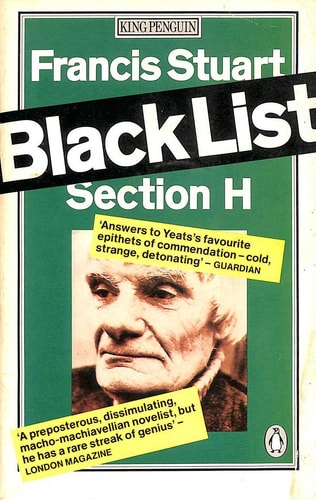
Black List, Section H
0
0
As an Amazon Associate and affiliate partner, Menrva Books earns from qualifying purchases. Learn more
Author Description
Black List, Section H is Francis Stuart’s twentieth novel, the consummation of a lifetime devoted to writing, and perhaps the keystone through which all of his other works must be viewed. Almost totally autobiographical, described by the novelist himself as “an imaginative fiction in which only real people appear, and under their actual names where possible,” the novel encompasses the period from 1919,when H, the hero, comes to Dublin and meets Maud Gonne and marries her adopted daughter, Iseult, through the period of the Second World War, when in 1939,burdened by marital and financial difficulties he accepts a position as lecturer at Berlin University. Stuart’s depiction of wartimeBerlin, the Allied bombings, and the endless shuffling between refugee and prison camps after the war is one of the few accounts of these experiences in English. More than a mere record of one man’s life, the book is an experience deeply lived and set down in fine prose with an intensity that is contagious.
Menrva's Summary
THE PULSE
The protagonist H navigates the collapse of his personal life and the broader disintegration of European society during the tumultuous decades surrounding the Second World War. Driven by a search for meaning amidst marital instability and financial ruin, H moves from the political fervor of Dublin to the precarious environment of wartime Berlin. The narrative follows his experiences as a lecturer, his survival through Allied bombings, and his subsequent displacement within refugee and prison camps. Written with a focus on internal reflection, the text functions as a semi-autobiographical account that blurs the line between historical record and subjective experience.
INSIDE THE PAGES
- Semi-autobiographical narrative framework
- Detailed depiction of wartime Berlin
- Exploration of the refugee experience
- Examination of political and personal exile
- Inclusion of real historical figures
- Focus on the psychological toll of war
- Non-linear reflection on memory and identity
- Prose characterized by high intensity and introspection
THE COLLECTIVE ECHO
Discussion often centers on the unique position of this work as a bridge between historical memoir and creative fiction. Readers frequently highlight the stark, unvarnished portrayal of the protagonist's moral and physical survival during the war years. Critics often note the author's ability to maintain a consistent, intense tone that elevates the narrative beyond a simple chronological account of events. The book is frequently cited for its contribution to the literature of exile and the complexities of human behavior under extreme duress. Many readers find the prose style to be a significant element of the reading experience, noting its precision and weight.
Page Count:
352
Publication Date:
1982-01-01
Publisher:
King Penguin Penguin Books
ISBN-10:
0140062297
ISBN-13:
9780140062298
Historical Fiction
Irish literature
War
Autobiographical fiction
20th Century
Community Tags
Similar Books