Flying Glare
0
0
As an Amazon Associate and affiliate partner, Menrva Books earns from qualifying purchases. Learn more
Author Description
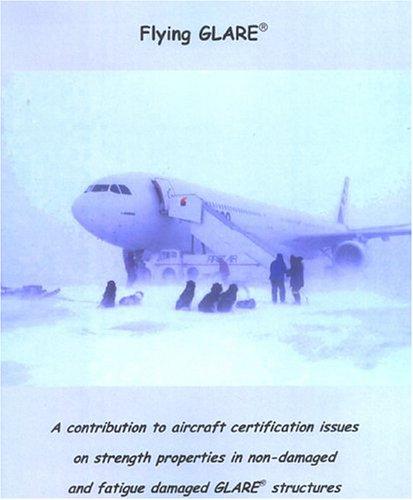
This Ph.D. dissertation is addressing the most important items which have to be considered if a structural material develops from the laboratory status to an aircraft application. The ultimate proof for the material is the certification as part of an aircraft component by the dedicated Airworthiness Authorities. Therefore, relevant FAR/JAR25 paragraphs and strength prediction and justification methods are discussed for the GLARE application. Included in the analysis are predictions of the long term behavior of GLARE, supported by an outdoor exposure program. The environmental influences on material properties, design values and on the strength justification methods are investigated and validated with test specimens which copy the design of Airbus full scale test specimens. Contents include: Airworthiness Regulations and Aircraft Certification, Design Criteria and Design Factors for Riveted Joints, Outdoor Exposure Test Program, Accelerated Diffusion, Tropic Ageing, Elementary Investigations, Riveted Joint Investigations, Miscellaneous, Summary and Conclusions.
Menrva's Summary
THE THESIS
This dissertation investigates the critical transition of structural materials from laboratory development to practical aircraft application, culminating in certification by airworthiness authorities. The work details relevant Federal Aviation Regulations (FAR) and Joint Aviation Regulations (JAR) Part 25 paragraphs, alongside methods for predicting and justifying the strength of GLARE (GLAss REinforced) materials. It includes an analysis of GLARE's long-term behavior, supported by an outdoor exposure program, and examines the impact of environmental factors on material properties, design values, and strength justification methods, validated through tests on specimens mimicking Airbus full-scale designs.
THE SCOPE MAP
- Airworthiness Regulations and Aircraft Certification
- Design Criteria and Design Factors for Riveted Joints
- Outdoor Exposure Test Program
- Accelerated Diffusion and Tropic Ageing
- Elementary Investigations
- Riveted Joint Investigations
- Summary and Conclusions
THE AUTHORITY PERSPECTIVE
This work is presented as a Ph.D. dissertation, indicating a rigorous academic approach focused on a specific technical challenge within aerospace engineering. The detailed examination of regulatory requirements, material properties, and testing methodologies suggests a text aimed at specialists in materials science and aeronautical engineering. The inclusion of experimental data and validation against industry standards points to a contribution intended for researchers and professionals involved in aircraft material certification and development.
Page Count:
460
Publication Date:
2004-01-01
ISBN-10:
9040724814
ISBN-13:
9789040724817
Science & Technology
Non-Fiction
Science
Aerospace Engineering
Research
Engineering
Community Tags
Similar Books