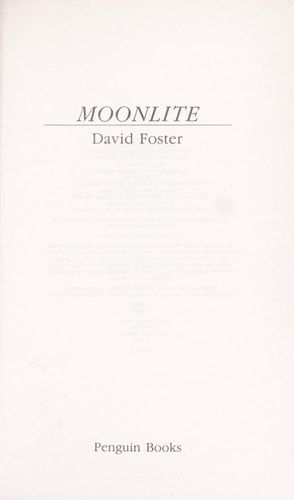
Moonlite
0
0
As an Amazon Associate and affiliate partner, Menrva Books earns from qualifying purchases. Learn more
Author Description
The hero makes his way to the Southern Hemisphere and en route he rejects Calvinism and loses his soul From Publishers Weekly Flora MacDuffie and her primitive clan eke out a marginal existence on the outermost, least hospitable British isle. When the Reverend Stewart Campbell arrives and upgrades the living conditions of the island's inhabitants, Flora is overjoyed. She allows Campbell to educate her son, Finbar, who later leaves home to study at an offshore religious college. Finbar eventually rejects the bible ("a load of old rubbish") in favor of science, discovers alcohol and is ousted from college, and journeys to the New West Highlands. There, he is caught up in the gold rush, forfeits his soul to an aboriginal witchdoctor and strikes it rich in an unexpected way. The Australian author cleverly satirizes that country's customs and values ("There is a purpose to college life," Finbar quips, "the production of the sort of man who can shine at a dinner party") and describes Australia's varied peoples and landscapes with precision, although his attention to minor details appears obsessive at times. Foster's characters obnoxiously perpetuate traditional prejudices: Campbell fulminates about the "wicked" and "depraved" Jews, blacks are called "nignogs" and a character "sweats like a dago at a dinner-dance." If one can overlook such comments, Moonlite is worth reading for its successful blend of realism, folklore and wit. Copyright 1988 Reed Business Information, Inc.
Menrva's Summary
THE PULSE
The arrival of a missionary on a remote British isle sets in motion a series of events that forces a young man to abandon his religious upbringing for the unpredictable realities of the Australian frontier. Finbar MacDuffie, raised in a primitive island community, seeks to transcend his origins through education, only to find himself disillusioned by the rigid structures of religious academia. Upon his expulsion, he migrates to the New West Highlands, where he encounters the chaotic forces of the gold rush. His objective shifts from intellectual pursuit to survival and self-definition, as he navigates a landscape defined by both physical hardship and moral ambiguity. The narrative follows his transformation as he confronts the cultural and spiritual consequences of his choices in a foreign land.
INSIDE THE PAGES
- Satirical examination of colonial customs and social values
- Integration of folklore and mythic elements into a realistic setting
- Exploration of the conflict between scientific rationalism and religious dogma
- Detailed descriptions of Australian landscapes and diverse populations
- Character-driven narrative focusing on the loss of innocence
- Critique of institutional education and social elitism
- Use of biting wit to expose traditional prejudices
- Non-linear progression from island isolation to frontier expansion
THE COLLECTIVE ECHO
Discussion often centers on the author's ability to balance sharp, satirical commentary with a grounded, often harsh, depiction of colonial life. Readers frequently highlight the precision of the prose, noting that the attention to minor detail provides a vivid sense of place despite the occasional density of the narrative. Critics observe that the work effectively blends realism with folklore, creating a distinct atmosphere that challenges the reader's perspective on traditional values. While some find the inclusion of period-specific prejudices difficult to navigate, the consensus remains that the book serves as a significant, albeit provocative, piece of Australian literature. The narrative's focus on the protagonist's moral decline provides a consistent thematic thread that invites ongoing analysis of the character's motivations.
Page Count:
224
Publication Date:
1988-05-03
Publisher:
Penguin Books
ISBN-10:
0140063358
ISBN-13:
9780140063356
Fiction
Satire
Historical
Coming of Age
Australian
Community Tags
Similar Books