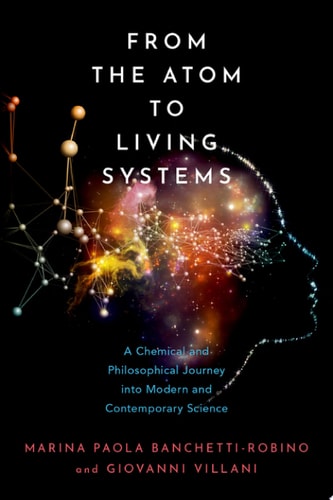
From the Atom to Living Systems: A Chemical and Philosophical Journey Into Modern and Contemporary Science
0
0
As an Amazon Associate and affiliate partner, Menrva Books earns from qualifying purchases. Learn more
Author Description
From the Atom to Living Systems represents an original historico-epistemological approach to follow the passage, in the microscopic analysis of reality, from the atomic to the molecular to the macromolecular levels and then to the threshold of life itself. Naturally, some parts of this journey have been developed in other works, some highly specialized and others of a more general nature. However, although this journey has often been traced in specialized scientific detail, the philosophical implications of the journey have not been discussed to any satisfactory degree. This scientific journey does have important philosophical consequences that constitute an integral part of this book, which is framed within the perspective of systems science and the so-called sciences of complexity, which are areas fundamental to 21st century science. In fact, the possibility of studying and understanding the material world through levels of complexity opens a great philosophical space that proposes to provide systemic and complex explanations, rather than reductive accounts that pretend to explain all phenomena through the interactions of elementary particles while considering all phenomena implicit and deterministic.The systemic and complex approach implies substituting unique bottom-up explanations, which move exclusively from the microscopically simple to the macroscopically complex, with a series of explanations that are horizontal within planes of complexity, vertically bottom up between various levels of complexity, vertically top-down, as well as circular in a manner that renders all levels of reality and the disciplines that study them as both autonomous and interconnected.
Menrva's Summary
THE THESIS
This book investigates the transition from atomic structures to living systems by bridging the gap between microscopic scientific analysis and its broader philosophical implications. Marina Paola Banchetti-Robino and Giovanni Villani utilize the framework of systems science and complexity theory to challenge traditional reductionist models. By examining the material world through various levels of complexity, the authors argue for a multidimensional explanatory model that moves beyond deterministic, bottom-up accounts of reality.
THE SCOPE MAP
What You Will Find
- A historical and epistemological analysis of the progression from atomic to macromolecular levels.
- A systemic methodology that replaces linear reductionism with horizontal, vertical, and circular explanatory planes.
- Integration of 21st-century scientific principles with philosophical inquiry regarding the nature of complex systems.
- A conceptual framework that treats scientific disciplines as both autonomous and interconnected entities.
THE AUTHORITY PERSPECTIVE
Experts identify this work as a significant contribution to the philosophy of science, particularly for its focus on the intersection of chemistry and systems theory. Readers frequently note the academic density of the prose, which is intended for those familiar with both scientific methodology and epistemological discourse.
Page Count:
304
Publication Date:
2023-01-01
Publisher:
Oxford University Press
ISBN-10:
0197598900
ISBN-13:
9780197598900
Philosophy
Science
Epistemology
Chemistry
Science
Systems Science
Complexity Theory
Community Tags
Similar Books