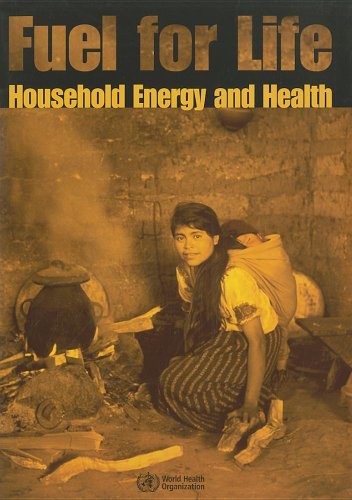
Fuel for Life
0
0
As an Amazon Associate and affiliate partner, Menrva Books earns from qualifying purchases. Learn more
Author Description
Energy use is essential to meet our most basic needs: cooking, boiling water, lighting and heating. It is also a prerequisite for good health, a reality that has been largely ignored by the world community. Left behind by development, more than 3 billion people still burn wood, dung, coal and other traditional fuels inside their homes. The resulting indoor air pollution is responsible for more than 1.5 million deaths a year, deaths that mostly fall on young children and their mothers. Moreover, indoor air pollution and inefficient household energy practices represent a stumbling block on our road to achieving the Millennium Development Goals. This publication summarizes the health impacts of household energy and gives an overview of past and future trends in solid fuel use and describes solutions to promote health and development in the context of the household energy challenge.--Publisher's description.
Menrva's Summary
THE THESIS
Household energy use is a critical, yet overlooked, determinant of global health and development. More than three billion people worldwide rely on traditional fuels like wood and dung for their basic needs, leading to indoor air pollution that causes over 1.5 million deaths annually, predominantly among young children and mothers. This publication details the severe health consequences of such practices, highlighting their impact on achieving development goals. It examines past and future trends in solid fuel consumption and proposes solutions to mitigate these challenges and foster health and progress.
THE SCOPE MAP
- Health impacts of household energy use, including mortality statistics.
- Overview of past and future trends in solid fuel use globally.
- Analysis of indoor air pollution as a barrier to Millennium Development Goals.
- Description of solutions to promote health and development in the context of household energy.
THE AUTHORITY PERSPECTIVE
This publication addresses the critical intersection of household energy use and public health, a topic often sidelined in global development discussions. It synthesizes health impacts with energy trends, offering a comprehensive overview of the challenges posed by traditional fuel burning. The work aims to inform strategies for promoting better health and achieving development objectives by tackling the issue of indoor air pollution. Its focus on practical solutions suggests an intent to guide policymakers and practitioners in this vital area.
Page Count:
42
Publication Date:
2006-01-01
ISBN-10:
9241563168
ISBN-13:
9789241563161
Non-Fiction
Science & Technology
Health
Environment
Public Health
Community Tags
Similar Books