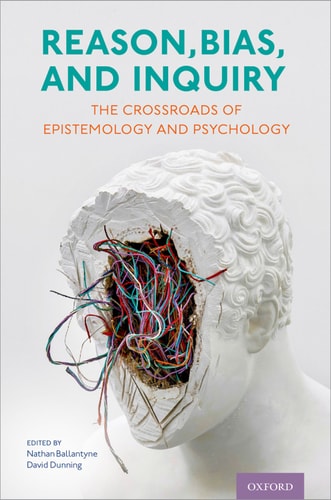
Reason, Bias, and Inquiry: The Crossroads of Epistemology and Psychology
0
0
As an Amazon Associate and affiliate partner, Menrva Books earns from qualifying purchases. Learn more
Author Description
Philosophers and psychologists routinely explore questions surrounding reasoning, inquiry, and bias, though typically in disciplinary isolation. What is the source of our intellectual errors? When can we trust information others tell us? This volume brings together researchers from across the two disciplines to present ideas and insights for addressing the challenges of knowing well in a complicated world in four parts: how to best describe the conceptual and empirical terrain of reason and bias; how reasoning and bias influence basic perception of the physical world; how to assess knowledge and expertise in ourselves and others; and how people approach reasoning and knowledge among and about groups. Together, the chapters show what philosophers and psychologists can do together when they shine light on the challenges of reaching the truth and avoiding errors. Reason, Bias, and Inquiry is a multidisciplinary meditation for readers who are awash in information but are uncertain how to manage it to make informed decisions.
Menrva's Summary
THE THESIS
This volume investigates the intersection of philosophical inquiry and psychological research to determine how individuals can improve their reasoning processes and mitigate cognitive bias in an information-dense environment. Michael G. Titelbaum curates a collection of interdisciplinary contributions that bridge the gap between theoretical epistemology and empirical psychology. The text provides a structured framework for understanding the mechanisms of intellectual error and the criteria for evaluating expertise. By synthesizing these two fields, the work offers a comprehensive approach to navigating the complexities of knowledge acquisition and decision-making.
THE SCOPE MAP
What You Will Find
- Conceptual and empirical analysis of the terrain surrounding human reason and cognitive bias.
- Examination of how reasoning processes influence the perception of the physical world.
- Methodologies for assessing personal knowledge and the expertise of others.
- Exploration of group dynamics in the context of collective reasoning and information management.
THE AUTHORITY PERSPECTIVE
Experts identify this volume as a significant contribution to the growing field of interdisciplinary cognitive studies. Readers frequently note the academic density of the prose, which serves as a rigorous resource for those interested in the synthesis of philosophical theory and psychological data.
Page Count:
378
Publication Date:
2022-01-01
Publisher:
Oxford University Press
ISBN-10:
0197636934
ISBN-13:
9780197636930
Non-Fiction
Philosophy
Psychology
Epistemology
Cultural Anthropology
Community Tags
Similar Books