Ironweed
0
0
As an Amazon Associate and affiliate partner, Menrva Books earns from qualifying purchases. Learn more
Author Description
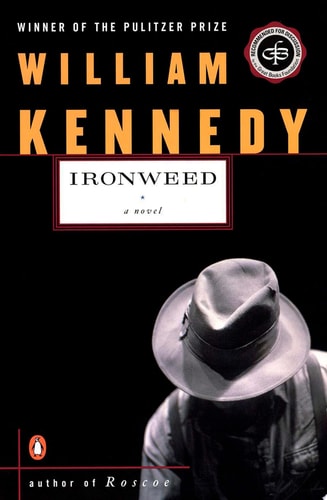
“[W]ith Ironweed, William Kennedy is making American literature.”—The Washington Post Book WorldFrancis Phelan has hit bottom. More than twenty years ago, the ex-ballplayer, part-time gravedigger, and full-time bum with the gift of gab left Albany after a tragic accident. Now, in 1938, Francis is back in town and faced with the wife and home he abandoned, roaming the old familiar streets, trying to make peace with the ghosts of the past and present. Winner of the Pultizer Prize and the National Book Critics Circle Award for Fiction, Ironweed “goes straight for the throat and the funnybone" (The New York Times).William Kennedy’s Albany Cycle of novels reflect what he once described as the fusion of his imagination with a single place. A native and longtime resident of Albany, New York, his work moves from the mid-nineteenth to the mid-twentieth century, chronicling family life, the city’s netherworld, and its spheres of power—financial, ethnic, political—often among the Irish-Americans who dominated the city in this period. The novels in his cycle include, Legs, Billy Phelan’s Greatest Game, Ironweed, Quinn’s Book, Very Old Bones, The Flaming Corsage, and Roscoe.
Menrva's Summary
THE PULSE
Francis Phelan, a man haunted by a tragic past, returns to his hometown of Albany during the Great Depression to confront the life he abandoned. Francis, a former ballplayer turned transient, navigates the harsh realities of 1938 Albany while grappling with the physical toll of poverty and the psychological weight of his previous actions. He must reconcile his current existence as a social outcast with the memories of the family he left behind decades earlier. The narrative employs a blend of gritty realism and surrealist elements, as Francis interacts with the literal ghosts of those he has harmed. His internal conflict is driven by the tension between his desire for redemption and the crushing inevitability of his circumstances.
INSIDE THE PAGES
- Use of magical realism through the manifestation of spectral figures from the protagonist's past
- Deeply atmospheric depiction of Depression-era Albany
- Exploration of the Irish-American immigrant experience
- Non-linear narrative structure incorporating flashbacks and hallucinations
- Focus on the themes of guilt, atonement, and familial abandonment
- Character-driven prose emphasizing internal monologue and dialogue
- Integration of historical context regarding labor and social class
- Stylistic focus on the intersection of memory and physical reality
THE COLLECTIVE ECHO
Readers and critics frequently highlight the stark, unflinching portrayal of poverty and the psychological complexity of the protagonist. Discussion often centers on the effective use of supernatural elements to externalize the character's internal trauma and moral failings. Many observers note the precision of the prose, which balances dark humor with a somber, reflective tone throughout the narrative. The work is widely recognized for its contribution to regional American literature and its ability to capture the specific social dynamics of mid-twentieth-century Albany. Readers often find the exploration of redemption to be both challenging and intellectually stimulating.
Page Count:
227
Publication Date:
1989-01-01
Publisher:
Penguin
ISBN-10:
0140070206
ISBN-13:
9780140070200
Literary Fiction
Fiction
Historical Fiction
Literary
Genre Fiction
American
Family Saga
20th Century
Community Tags
Similar Books