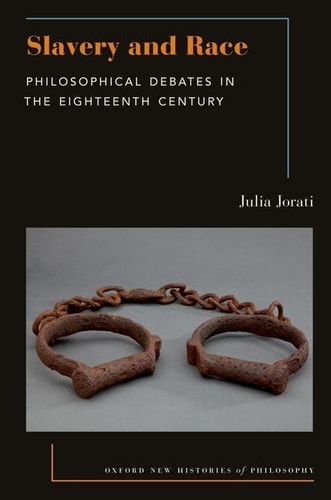
Slavery and Race: Philosophical Debates in the Eighteenth Century
0
0
As an Amazon Associate and affiliate partner, Menrva Books earns from qualifying purchases. Learn more
Author Description
Millions of Africans were enslaved and transported to the Americas in the eighteenth century. Europeans--many of whom viewed themselves as enlightened--endorsed, funded, legislated, and executed the slave trade. This atrocity had a profound impact on philosophy, but historians of the discipline have so far neglected to address the topics of slavery and race. Many authors--including enslaved and formerly enslaved Black authors--used philosophical ideas to advocate for abolition, analyze racist attitudes, and critique racial bias. Other authors attempted to justify the transatlantic slave trade by advancing philosophical defenses of racial chattel slavery.Slavery and Race: Philosophical Debates in the Eighteenth Century explores these philosophical ideas and arguments, with a focus on the role race played in discussions of slavery. In doing so, author Julia Jorati reveals how closely associated Blackness and slavery were at that time and how many White people viewed Black people as naturally destined for slavery. In addition to examining well-known authors like David Hume, Immanuel Kant, and Jean-Jacques Rousseau, Jorati also discusses less widely studied philosophers like Quobna Ottobah Cugoano, Lemuel Haynes, and Olympe de Gouges. By revealing important aspects of debates about slavery in North America and Europe, this book and its companion volume on the sixteenth and seventeeth centuries are valuable resources for readers interested in a more complete history of early modern philosophy.
Menrva's Summary
THE THESIS
This book investigates the intersection of eighteenth-century philosophical thought with the justification and critique of the transatlantic slave trade. Julia Jorati, a scholar of early modern philosophy, examines how European thinkers integrated concepts of race into their intellectual frameworks. By analyzing both canonical figures and marginalized voices, the text argues that the history of philosophy is inextricably linked to the development of racial ideologies and the defense of chattel slavery.
THE SCOPE MAP
What You Will Find
- Analysis of philosophical arguments used to both justify and oppose the transatlantic slave trade.
- Comparative study of canonical philosophers like Hume, Kant, and Rousseau alongside Black authors such as Cugoano and Haynes.
- Examination of the conceptual association between Blackness and slavery in Enlightenment-era discourse.
- Historical context regarding the legislative and economic endorsement of slavery by European intellectuals.
THE AUTHORITY PERSPECTIVE
Experts identify this work as a necessary intervention in the history of philosophy, addressing a long-standing omission regarding the discipline's complicity in racial discourse. Readers frequently note the clarity with which the author bridges the gap between abstract philosophical theory and the material reality of the slave trade.
Page Count:
352
Publication Date:
2023-01-01
Publisher:
Oxford University Press
ISBN-10:
0197659241
ISBN-13:
9780197659243
History
Philosophy
Politics
Educational Resources
Ethics & Morality
Slavery
Race
History & Schools of Thought
Race Relations
Schools & Teaching
Political Philosophy
Eighteenth Century
Community Tags
Similar Books