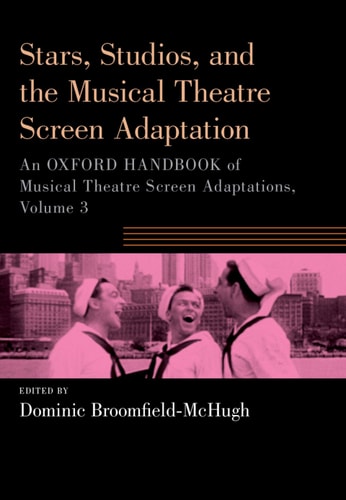
Stars, Studios, and the Musical Theatre Screen Adaptation: An Oxford Handbook of Musical Theatre Screen Adaptations, Volume 3
0
0
As an Amazon Associate and affiliate partner, Menrva Books earns from qualifying purchases. Learn more
Author Description
Hollywood's conversion to sound in the 1920s created an early peak in the film musical, following the immense success of The Jazz Singer. The opportunity to synchronize moving pictures with a soundtrack suited the musical in particular, since the heightened experience of song and dance drew attention to the novelty of the technological development. Until the near-collapse of the genre in the 1960s, the film musical enjoyed around thirty years of development, as landmarks such as The Wizard of Oz, Meet Me in St. Louis, Singin' in the Rain, and Gigi showed the exciting possibilities of putting musicals on the silver screen.The final of three volumes, Stars, Studios, and the Musical Theatre Screen Adaptation: An Oxford Handbook traces how stardom and technology has affected the evolution of the genre of the stage-to-screen musical. Many chapters examine specific screen adaptations in depth, with case studies on the screen versions of Broadway favorites Carousel and Brigadoon, while others deal with broad issues such as how music rights affected how studios approached screen adaptations. Together, the chapters incite lively debates about the process of adapting Broadway for the big screen and provide models for future studies.Volume I: The Politics of the Musical Theatre Screen AdaptationVolume II: Race, Sexuality, and Gender and the Musical Screen AdaptationVolume III: Stars, Studios, and the Musical Theatre Screen Adaptation
Menrva's Summary
THE THESIS
This volume investigates how the intersection of star power, studio systems, and evolving technology shaped the development and adaptation of stage musicals into film. Dominic Broomfield-McHugh, a scholar of musical theatre and film, synthesizes historical data and industry analysis to explain the mechanics behind the transition of Broadway properties to the silver screen. The text argues that the commercial and creative strategies employed by studios were fundamentally influenced by the need to showcase emerging sound technology and the specific appeal of individual performers. By examining the period from the 1920s through the 1960s, the author provides a framework for understanding the economic and artistic pressures that defined the genre.
THE SCOPE MAP
What You Will Find
- Analysis of the impact of sound synchronization technology on the film musical genre.
- Case studies focusing on specific adaptations such as Carousel and Brigadoon.
- Examination of legal and logistical challenges regarding music rights and studio production models.
- Historical overview of the rise and near-collapse of the film musical between the 1920s and 1960s.
THE AUTHORITY PERSPECTIVE
Experts recognize this volume as a significant contribution to the study of screen adaptations, noting its rigorous approach to industry history. The text is frequently cited for its detailed analysis of studio practices and its utility as a reference for scholars of film and musical theatre.
Page Count:
399
Publication Date:
2023-01-01
Publisher:
Oxford University Press
ISBN-10:
0197663273
ISBN-13:
9780197663271
History
Music
Film & Video
Radio
Theater
Film
Individual Director
Academic
Humanities
Community Tags
Similar Books