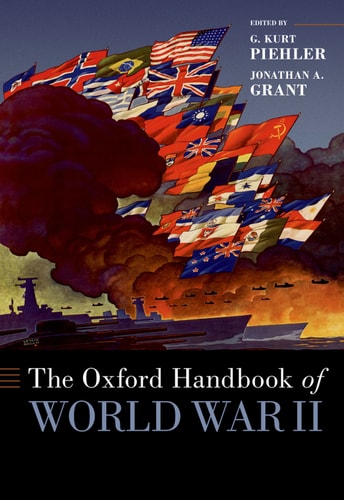
The Oxford Handbook of World War II
0
0
As an Amazon Associate and affiliate partner, Menrva Books earns from qualifying purchases. Learn more
Author Description
World War II left virtually no nation or corner of the world untouched, dramatically transforming human life and society. It prompted the unprecedented mobilization of whole societies and witnessed a scale of state-sanctioned violence that staggers the imagination, with more than 100 million casualties. The war resulted in an almost complete collapse of any norms geared toward avoiding the unnecessary loss of civilian life and shaped the worldview and psyches of generations. The Oxford Handbook of World War II broadens traditional narratives of the war and in the process changes our understanding of this epic conflict.Organized both chronologically and thematically and with particular attention to the pre- and post-war eras, the Handbook revises and extends existing scholarship. With chapters on the rise and fall of Nazi Germany, the land war in Western Europe, the Battle of Britain, the impact of war on the major combatants (Great Britain, France, the United States, Japan, and China), the Japanese attack on Pearl Harbor, the decision to use the atomic bomb in 1945, and the cultural responses to the war, the chapters span much of the twentieth century. They suggest areas of scholarly consensus, identify interpretative clashes, and propose agendas for further scholarly investigation, with an emphasis on interdisciplinary inquiry. For example, the end of the Cold War had a profound impact on the way World War II was understood. Many formerly closed records in the former Soviet Union and China were opened to scholars, facilitating a more complex view of the Soviet war effort and suggesting that Stalin's army did not simply triumph by overwhelming German forces with sheer numbers but mastered the demands of a vast and logistically demanding front.In conceptualizing the volume, editors Kurt Piehler and Jonathan Grant also sought out contributions on lesser known aspects of the war, such as the Bengal famine in India, the treatment of prisoners of war, the role of Middle
Menrva's Summary
THE THESIS
This volume investigates the multifaceted global impact of World War II by synthesizing diverse scholarly perspectives to re-evaluate the conflict's origins, execution, and long-term consequences. Editors G. Kurt Piehler and Jonathan A. Grant assemble a collection of interdisciplinary essays that challenge traditional, Eurocentric narratives. By incorporating newly accessible archival data from the former Soviet Union and China, the text provides a comprehensive framework for understanding the war as a transformative event that reshaped twentieth-century society and international relations.
THE SCOPE MAP
What You Will Find
- Chronological and thematic analysis of major combatants including Great Britain, France, the United States, Japan, and China.
- Examination of specific military engagements such as the Battle of Britain and the attack on Pearl Harbor.
- Investigation into overlooked historical aspects like the Bengal famine and the treatment of prisoners of war.
- Scholarly assessment of cultural responses, the rise of Nazi Germany, and the strategic decision to deploy atomic weaponry.
THE AUTHORITY PERSPECTIVE
Experts recognize this handbook as a significant contribution to military historiography due to its inclusion of previously restricted archival material. Readers frequently note the academic density of the prose, which serves as a rigorous resource for students and researchers seeking a nuanced understanding of the global conflict.
Page Count:
717
Publication Date:
2023-01-01
Publisher:
Oxford University Press
ISBN-10:
019767657X
ISBN-13:
9780197676578
History
Military History
Modern History
Reference
Academic
American History
World Civilization
Community Tags
Similar Books