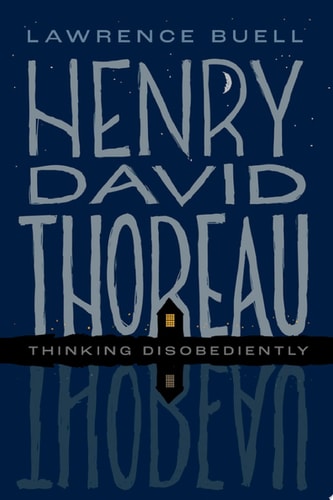
Henry David Thoreau: Thinking Disobediently
0
0
As an Amazon Associate and affiliate partner, Menrva Books earns from qualifying purchases. Learn more
Author Description
"When I wrote the following pages, or rather the bulk of them, I lived alone, in the woods, a mile from any neighbor, in a house which I had built myself, on the shore of Walden Pond..."Henry David Thoreau (1817-1862) was a leading figure in the American Transcendentalist movement and the era of U. S. literary emergence, an intellectual with worldwide influence as essayist, social thinker, naturalist-environmentalist, and sage. Thoreau's Walden, an autobiographical narrative of his two-year sojourn in a self-built lakeside cabin, is one of the most widely studied works of American literature. It has generated scores of literary imitations and thousands of neo-Walden experiments in back-to-basics living, both rural and urban. Thoreau's great essay, "Civil Disobedience," is a classic of American political activism and a model for nonviolent reform movements around the world. Thoreau also stands as an icon of modern American environmentalism, the father of American nature writing, a forerunner of modern ecology, and a harbinger of freelance spirituality combining the wisdom of west and east.Thoreau is also a controversial figure. From his day to ours, he has provoked sharply opposite reactions ranging from reverence to dismissal. Scholars have regularly offered conflicting assessments of the significance of his work, the evolution of his thought, even the facts of his life. Some disagreements are in the eye of the beholder, but many follow from challenges posed by his own cross-grained idiosyncrasies. He was an advocate for individual self-sufficiency who never broke away from home, a self-professed mystic now also acclaimed as a pioneer natural and applied scientist, and a seminal theorist of nonviolent protest who defended the most notorious guerrilla fighter of his day. All told, he remains a rather enigmatic figure both despite and because we know so much about him, beginning with the two-million-word journal he kept throughout his adult life.
Menrva's Summary
THE THESIS
This work investigates the enduring intellectual legacy and paradoxical nature of Henry David Thoreau, examining how his life and writings continue to shape modern political and environmental discourse. Lawrence Buell, a distinguished scholar of American literature, utilizes Thoreau's extensive journals, his seminal essays, and the historical context of the Transcendentalist movement to deconstruct the myths surrounding the author. The book argues that Thoreau's influence persists precisely because of the contradictions inherent in his philosophy of self-reliance, civil disobedience, and environmental stewardship.
THE SCOPE MAP
What You Will Find
- An analysis of the Transcendentalist movement and its impact on 19th-century American thought.
- A critical examination of Thoreau's major works, including Walden and Civil Disobedience.
- Biographical data derived from Thoreau's two-million-word personal journal.
- A study of Thoreau's dual legacy as both a pioneer of nature writing and a catalyst for global nonviolent political reform.
THE AUTHORITY PERSPECTIVE
Scholars and readers alike recognize this text as a sophisticated, balanced assessment of a complex historical figure. Experts frequently highlight Buell's ability to navigate the conflicting interpretations of Thoreau's life and work with academic rigor.
Page Count:
152
Publication Date:
2023-01-01
Publisher:
Oxford University Press
ISBN-10:
0197684262
ISBN-13:
9780197684269
History
Philosophy
Biography
Literary Criticism
American
Community Tags
Similar Books