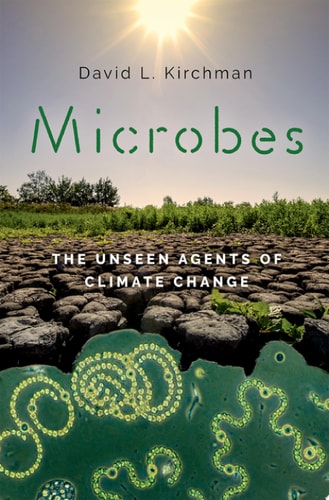
Microbes: The Unseen Agents of Climate Change
0
0
As an Amazon Associate and affiliate partner, Menrva Books earns from qualifying purchases. Learn more
Author Description
For billions of years, microbes have produced and consumed greenhouse gases that regulate global temperature and in turn other aspects of our climate. The balance of these gases maintains Earth's habitability. Methane, a greenhouse gas produced only by microbes, may have kept Earth out of a deep freeze billions of years ago. Likewise, variations in carbon dioxide, another greenhouse gas released by microbes and other organisms, help to explain the comings and goings of ice ages over the last million years.Now we face a human-made climate crisis with drastic consequences. The complete story behind greenhouse gases, however, involves microbes and their role in natural ecosystems. Microscopic organisms are also part of the solution, producing biofuels and other forms of green energy which keep fossil fuels in the ground. Other microbes can be harnessed to reduce the release of methane and nitrous oxide from agriculture, and geoengineering solutions that depend on microbes could pull carbon dioxide out of the atmosphere.In this book, David L. Kirchman introduces a unique and timely contribution to the climate change conversation and the part microbes play in our past, present, and future. He takes readers into the unseen world behind the most important environmental problem facing society today and encourages us to embrace microbial solutions that are essential to mitigating climate change.
Menrva's Summary
THE THESIS
This book investigates the critical, often overlooked role that microbial life plays in regulating Earth's climate and its potential to serve as a tool for mitigating the current human-made climate crisis. David L. Kirchman, an expert in marine microbiology, synthesizes biological data and environmental history to explain how microbes have influenced greenhouse gas levels for billions of years. He argues that understanding these microscopic processes is necessary for developing effective strategies to combat global warming, ranging from biofuel production to advanced geoengineering techniques.
THE SCOPE MAP
What You Will Find
- Historical analysis of microbial influence on greenhouse gas regulation over geological time.
- Examination of methane and carbon dioxide production cycles in natural ecosystems.
- Evaluation of biotechnological applications including biofuel development and agricultural emission reduction.
- Discussion of geoengineering frameworks that utilize microbial processes to sequester atmospheric carbon.
THE AUTHORITY PERSPECTIVE
Experts recognize this work as a significant contribution to the climate change discourse by bridging the gap between microbiology and environmental policy. Readers frequently note the clarity of the prose, which makes complex biological mechanisms accessible to those without a specialized scientific background.
Page Count:
240
Publication Date:
2024-01-01
Publisher:
Oxford University Press
ISBN-10:
019768856X
ISBN-13:
9780197688564
Science
Ecology
Climate Change
Microbiology
Community Tags
Similar Books