Child of All Nations
0
0
As an Amazon Associate and affiliate partner, Menrva Books earns from qualifying purchases. Learn more
Author Description
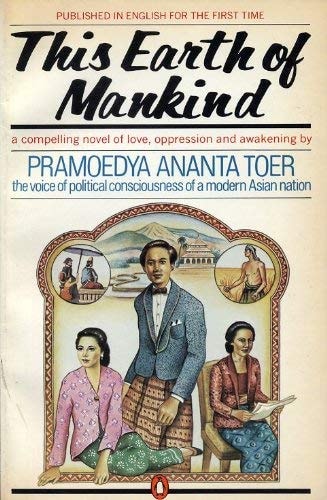
The imperialistic injustices of the 19th century have become the firmly institutionalized injustices of the 20th century in many countries, as evidenced by the fact that Pramoedya wrote this novel while imprisoned in Indonesia because he was considered a subversive writer. The work, the second volume of a quartet called the "Buru Tetralogy," speaks convincingly for itself. The balanced and enchanted life of natives in the Dutch East Indies of the 1890s is disrupted as they are set against one another and destroyed by the Dutch. As Minke, the main character of This Earth of Mankind ( LJ 10/1/93), struggles to reclaim a dignified identity amid the confusion, we can feel the universal plight of the oppressed anywhere, whether caused by governments, terrorists, or technology. If this seems a bold claim for a novel, it is because Child is the kind of work that upholds the drastically important tradition of literature's attempt to create empathy. A moving work and a valuable cultural artifact. Recommended for general collections.- Brian Geary, West Seneca, N.Y.Copyright 1993 Reed Business Information, Inc.
Menrva's Summary
THE PULSE
Minke, a young Javanese intellectual, confronts the systemic brutality of Dutch colonial rule as he attempts to forge a personal and national identity. Following the events of the previous volume, Minke navigates the complex social hierarchies of the Dutch East Indies during the 1890s. He faces opposition from colonial authorities who seek to maintain control by pitting native populations against one another. The narrative, presented through a reflective and observant lens, tracks Minke's evolution from a student of European thought to a critic of imperialist structures. His objective remains the preservation of human dignity in a world defined by institutionalized oppression.
INSIDE THE PAGES
- Exploration of colonial power dynamics and racial hierarchies
- Development of the protagonist's political consciousness
- Detailed depiction of 1890s Dutch East Indies society
- Focus on the tension between traditional Javanese values and Western education
- Examination of the role of the press in social change
- Critique of bureaucratic and legal injustices
- Emphasis on the struggle for individual agency under occupation
- Use of historical context to mirror universal themes of resistance
THE COLLECTIVE ECHO
Readers and critics frequently highlight the author's ability to weave personal growth with the broader political landscape of colonial Indonesia. Discussion often centers on the protagonist's internal conflict as he reconciles his admiration for European enlightenment with the reality of colonial exploitation. The pacing is noted for its deliberate, methodical approach to character development, which allows for a deep immersion into the social atmosphere of the era. Many observers emphasize the significance of the work as a testament to the power of literature in documenting the human experience under systemic suppression. The text is widely regarded for its clarity in articulating the complexities of identity formation within a fractured society.
Page Count:
296
Publication Date:
1984-01-01
Publisher:
Penguin Books
ISBN-10:
0140070095
ISBN-13:
9780140070095
Historical Fiction
Literary Fiction
Political fiction
Post-Colonial