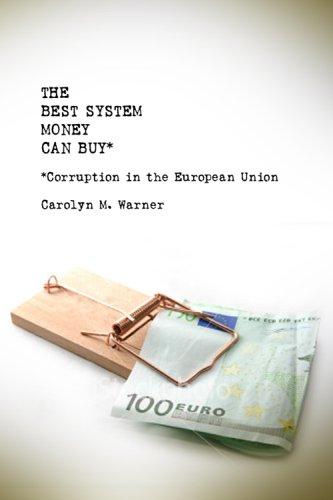
The Best System Money Can Buy
0
0
As an Amazon Associate and affiliate partner, Menrva Books earns from qualifying purchases. Learn more
Author Description
"As the European Union moved in the 1990s to a unified market and stronger common institutions, most observers assumed that the changes would reduce corruption. Aspects of the stronger EU promised to preclude - or at least reduce - malfeasance: regulatory harmonization, freer trade, and privatization of publicly owned enterprises. Market efficiencies would render corrupt practices more visible and less common." "In The Best System Money Can But, Carolyn M. Warner systemically and often entertainingly gives the lie to these assumptions and provides a framework for understanding the persistence of corruption in the Western states of the EU. In compelling case studies, she shows that under certain conditions, politicians and firms across Europe chose to counter the increased competition they faced due to liberal markets and political reforms by resorting to corruption. More elections have made ever-larger funding demands on political parties; privatization has proved to be a theme park for economic crime and party profit; firms and politicians collude in many areas where EU harmonization has resulted in a net reduction in law-enforcement powers; and state-led "export promotion" efforts, especially in the armaments, infrastructure, and energy sectors, have virtually institutionalized bribery."--Jacket.
Menrva's Summary
THE THESIS
The integration of the European Union was expected to curb corruption, yet it has paradoxically created new avenues for it. Carolyn M. Warner challenges the assumption that market liberalization and regulatory harmonization would reduce malfeasance in Western EU states. Instead, she demonstrates through case studies how increased competition and political reforms have led politicians and firms to resort to corruption under specific conditions. The book details how rising election funding demands, privatization creating opportunities for economic crime, and reduced law-enforcement powers due to EU harmonization have fostered collusion between firms and politicians, particularly in sectors like armaments, infrastructure, and energy, where state-led export promotion has institutionalized bribery.
THE SCOPE MAP
- Analysis of corruption within the European Union during the 1990s.
- Examination of how regulatory harmonization and privatization can foster corruption.
- Case studies illustrating collusion between politicians and firms across Europe.
- Discussion of the impact of increased election funding demands on political parties.
- Exploration of how market efficiencies can be subverted by corrupt practices.
- Focus on sectors such as armaments, infrastructure, and energy in relation to bribery.
- Framework for understanding the persistence of corruption despite EU reforms.
THE AUTHORITY PERSPECTIVE
The book provides a systemic and often entertaining counter-argument to the assumption that EU integration would reduce corruption. Warner's analysis, supported by compelling case studies, reveals how specific conditions within the EU framework have led to the persistence and even institutionalization of bribery. The work is noted for offering a framework to understand these paradoxical outcomes, particularly in sectors heavily influenced by state-led export promotion efforts. It challenges conventional wisdom by showing how reforms intended to increase transparency can, under certain circumstances, create new opportunities for illicit activities.
Page Count:
256
Publication Date:
2007-01-01
ISBN-10:
0801445558
ISBN-13:
9780801445552
History
Politics
Crime
Economics
Non-Fiction
European Union
Community Tags
Similar Books