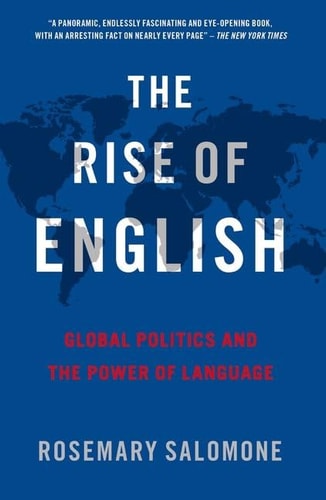
The Rise of English: Global Politics and the Power of Language
0
0
As an Amazon Associate and affiliate partner, Menrva Books earns from qualifying purchases. Learn more
Author Description
A sweeping account of the global rise of English and the high-stakes politics of languageSpoken by a quarter of the world's population, English is today's lingua franca--its common tongue. The language of business, popular media, and international politics, English has become commodified for its economic value and increasingly detached from any particular nation. This meteoric "rise of English" has many obvious benefits to communication. Tourists can travel abroad with greater ease. Political leaders can directly engage their counterparts. Researchers can collaborate with foreign colleagues. Business interests can flourish in the global economy.But the rise of English has very real downsides at times generating intense legal conflicts. In Europe, imperatives of political integration, job mobility, and university rankings compete with pride in national language and heritage as countries like France attempt to curb its spread. In countries like India, South Africa, Morocco, and Rwanda, it has stratified society along lines of English proficiency and devalued commonly spoken languages. In Anglophone countries like the United States and England, English isolates us from the cultural and economic benefits of speaking other languages.In The Rise of English, Rosemary Salomone offers a commanding view of the unprecedented spread of English and the far-reaching effects it has on global and local politics, economics, media, education, and business. From the inner workings of the European Union to China's use of language as "soft power" in Africa, Salomone draws on a wealth of research to tell the complex story of English--and, ultimately, to argue for English not as a force for domination but as a core component of multilingualism and the transcendence of linguistic and cultural borders.
Menrva's Summary
THE THESIS
This book investigates the complex global expansion of the English language and the resulting socio-political tensions between linguistic dominance and the necessity of multilingualism. Rosemary C. Salomone, a professor of law, utilizes a multidisciplinary approach to examine how English functions as a global lingua franca while simultaneously creating stratified societies and cultural friction. She argues that the spread of English should be reframed not as a tool for cultural hegemony, but as a foundational element of a broader, inclusive multilingual framework.
THE SCOPE MAP
What You Will Find
- Analysis of language policy within the European Union and its impact on national identity.
- Examination of English as a form of soft power in China and its influence in African nations.
- Case studies on social stratification based on English proficiency in India, South Africa, and Morocco.
- Discussion on the economic and cultural consequences of monolingualism in the United States and England.
THE AUTHORITY PERSPECTIVE
Experts recognize this work as a comprehensive analysis of the intersection between language policy and international relations. Readers frequently note the balance between academic rigor and the accessible exploration of how language shapes global power dynamics.
Page Count:
504
Publication Date:
2024-01-01
Publisher:
Oxford University Press
ISBN-10:
0197765750
ISBN-13:
9780197765753
Politics
History
Language and education
World politics
English
Social Aspects
Language Arts
Reference
English & College Success
Globalization
Linguistics
Words Language & Grammar
Education
Political Aspects
Sociology
Community Tags
Similar Books