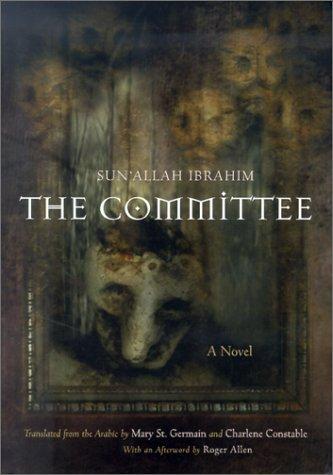
The Committee
0
0
As an Amazon Associate and affiliate partner, Menrva Books earns from qualifying purchases. Learn more
Author Description
Sun'allah Ibrahim has been called the Egyptian Kafka. And no wonder, this wry take on Kafka's The Trial revolves around its narrator's attempts to petition successfully the elusive ruling body of his country, known simply as "the Committee." Consequences for his actions range from the absurd to the hideous. In Kafkaesque fashion - an intriguingly symbolic and minimalist style - Ibrahim offers an unbroken first-person narrative rendered in brief, crisp prose framed by a conspicuous absence of vivid imagery. Furthermore, the petitioner is a man without identity. The ideal antihero, he remains, as does his country, unnamed throughout the intricate plot with a locale suggestive of 1970s Cairo. The Committee sardonically pierces the inflammatory terrain between ordinary men, unbridled displays of power, and other broader concerns of the author's native Egypt. The novel's corrosive, shocking conclusion catapults satiric surrealism into a new realm.--BOOK JACKET.
Menrva's Summary
THE PULSE
A man without identity attempts to petition an elusive ruling body, facing absurd and hideous consequences. The narrator, unnamed and lacking any personal history, navigates a labyrinthine bureaucracy in pursuit of an audience with 'the Committee,' the shadowy authority governing his country. His objective is to achieve a successful petition, but the forces opposing him are the opaque and arbitrary nature of the state itself, coupled with the inherent powerlessness of the individual. The narrative unfolds as an unbroken first-person account, characterized by brief, crisp prose and a deliberate lack of vivid imagery, suggesting a world stripped of color and individuality, possibly set in 1970s Cairo.
INSIDE THE PAGES
- Unbroken first-person narrative perspective.
- Minimalist and symbolic writing style.
- Protagonist is deliberately unnamed and lacks identity.
- Setting is suggestive of 1970s Cairo.
- Exploration of the relationship between ordinary men and displays of power.
- Themes of bureaucracy, state control, and individual powerlessness.
- Sardonic and satirical tone.
- Corrosive and shocking conclusion.
THE COLLECTIVE ECHO
The novel is noted for its Kafkaesque parallels, drawing comparisons to Franz Kafka's 'The Trial' due to its exploration of an individual's struggle against an inscrutable authority. Critics have highlighted Ibrahim's symbolic and minimalist style, characterized by brief, crisp prose and a conspicuous absence of vivid imagery, which contributes to the protagonist's lack of identity and the oppressive atmosphere of the setting. The book is recognized for its sardonic commentary on the power dynamics between ordinary citizens and unchecked state power, particularly within the context of Egypt. Its conclusion is described as catapulting satiric surrealism into a new realm, leaving a lasting, shocking impression.
Page Count:
208
Publication Date:
2001-01-01
ISBN-10:
0815607261
ISBN-13:
9780815607267
Fiction
Classics
Literary Fiction
Surrealism
Political fiction