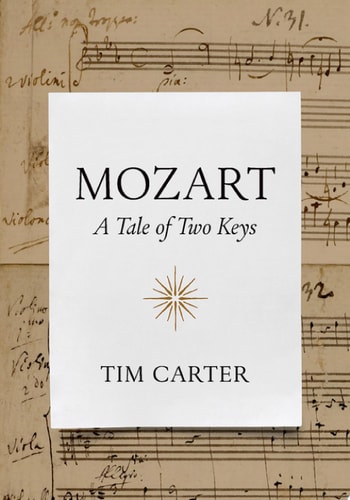
Mozart: A Tale of Two Keys
0
0
As an Amazon Associate and affiliate partner, Menrva Books earns from qualifying purchases. Learn more
Author Description
Why Do Mozart's Musical Works In His Range Of Major And Minor Keys Sound So Different One From The Other? This Study Of His Orchestral, Chamber, And Theatrical Works In E Flat Major And A Major Explores Several Possible Answers: Tuning And Temperament; Instrumentation; Musical Intertextualities; Key-specific Idioms; And The Role Of Opera In Establishing A Tonal Vocabulary That, In Turn, Offers New Ways Of Thinking About Musical Meaning Across A Wide Range Of Genres In Late Eighteenth-century Music. These Issues Are Central To Understanding Mozart's Creative Processes, As Well As The Listening Strategies That He Cultivated In His Audiences. His First Orchestral Work, Written Just Before His Ninth Birthday, Was A Symphony In E Flat Major; His Last Was The Clarinet Concerto In A Major. The Two Keys Sit At Opposite Ends Of His Tonal Spectrum And Have Quite Different Characters. As A Result, One Can Speak Of A Family Of Pieces In Each Key, Whether In His Symphonies, His String Quartets And Sonatas, Or His Operatic Numbers. Each Key Also Has Strengths And Weaknesses, With Separate Potentials That Mozart Exploits To The Full, Usually Successfully Though Sometimes Not. He Therefore Teases Our Expectations In Quite Striking, And Often Humorous, Ways, Revealing An Intense Joy In The Art And Craft Of Playing With Sound-- Provided By Publisher.
Menrva's Summary
THE THESIS
This study investigates why Mozart’s musical compositions in E-flat major and A major possess distinct tonal characters and how these keys influenced his creative output. Tim Carter, a distinguished musicologist, utilizes a comprehensive analysis of Mozart’s orchestral, chamber, and theatrical works to argue that key choice was a deliberate compositional strategy. By examining the interplay between instrumentation, tuning, and intertextuality, the author demonstrates how these specific keys shaped both the composer's process and the audience's reception in the late eighteenth century.
THE SCOPE MAP
What You Will Find
- Comparative analysis of Mozart's works in E-flat major and A major
- Examination of tuning, temperament, and instrumentation effects
- Exploration of operatic tonal vocabulary and its influence on instrumental genres
- Case studies ranging from early symphonies to late concertos
THE AUTHORITY PERSPECTIVE
Experts recognize this work as a rigorous contribution to Mozart scholarship that effectively bridges the gap between technical music theory and historical context. Readers frequently note the academic density of the prose, which provides a specialized look at the mechanics of eighteenth-century composition.
Page Count:
200
Publication Date:
2025-09-10
Publisher:
Oxford University Press
ISBN-10:
0197806333
ISBN-13:
9780197806333
History
Biography
Music
Music theory
Musical Genres
Performance theory
Community Tags
Similar Books