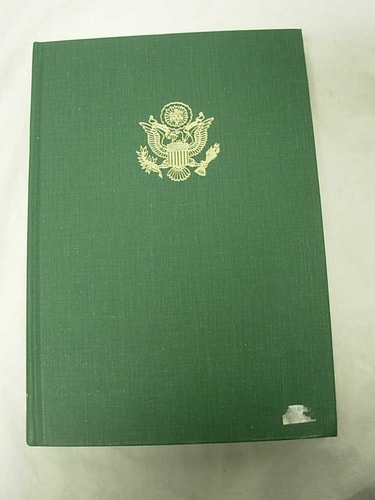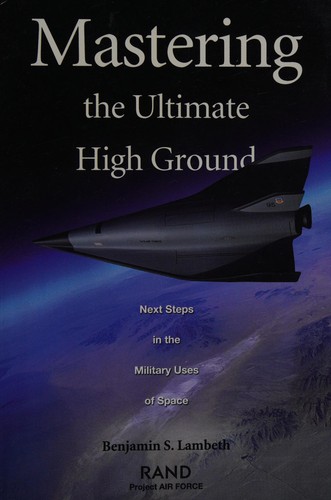
Mastering the Ultimate High Ground
0
0
As an Amazon Associate and affiliate partner, Menrva Books earns from qualifying purchases. Learn more
Author Description
The author assesses the military space challenges that face the Air Force and the nation in light of the findings and recommendations of the congressionally mandated Space Commission, released in January 2001. After reviewing the main milestones in the Air Force's involvement in space since its creation as an independent service in 1947, he examines the circumstances that occasioned the Space Commission's creation, as well as the conceptual and organizational roadblocks that have impeded a more rapid growth of U.S. military space capability. He concludes that the Air Force faces five basic challenges with respect to space: continuing the operational integration of space with the three terrestrial warfighting mediums while ensuring the organizational differentiation of space from Air Force air; effectively wielding its newly granted military space executive-agent status; realizing a transparent DoD-wide budget category for space; showing progress toward fielding a meaningful space control capability while decoupling that progress from any perceived taint of force-application involvement; and making further progress toward developing and nurturing a cadre of skilled space professionals within the Air Force.
Menrva's Summary
THE THESIS
The United States Air Force faces critical challenges in integrating space capabilities with terrestrial warfare while maintaining organizational distinction and securing adequate funding. Benjamin S. Lambeth's analysis, informed by the 2001 Space Commission's findings, traces the Air Force's historical engagement with space since 1947. He scrutinizes the factors leading to the commission's formation and the obstacles hindering the rapid expansion of U.S. military space power. The book details five core issues: operational integration versus organizational differentiation, effective utilization of military space executive-agent status, creation of a transparent space budget, development of space control capabilities without perceived offensive intent, and the cultivation of space professionals.
THE SCOPE MAP
- Review of the Air Force's space involvement since 1947
- Analysis of the circumstances leading to the 2001 Space Commission
- Examination of conceptual and organizational impediments to U.S. military space capability growth
- Assessment of the challenge of integrating space operations with air and ground forces
- Discussion on the organizational differentiation of space from air power
- Evaluation of the military space executive-agent status
- Analysis of the need for a transparent DoD-wide budget category for space
- Exploration of developing a space control capability and its implications
THE AUTHORITY PERSPECTIVE
This book is recognized for its detailed examination of the strategic and organizational hurdles confronting the U.S. Air Force in space operations. It provides a thorough analysis of the issues highlighted by the 2001 Space Commission, offering insights into the complexities of military space integration and capability development. The work is likely to be of interest to policymakers, military strategists, and those involved in national security and aerospace policy. It presents a structured argument for addressing fundamental challenges to ensure future U.S. dominance in the space domain.
Page Count:
193
Publication Date:
2003-01-01
ISBN-10:
0833033301
History
Non-Fiction
Politics
Aerospace
National security
Military History
Community Tags
Similar Books