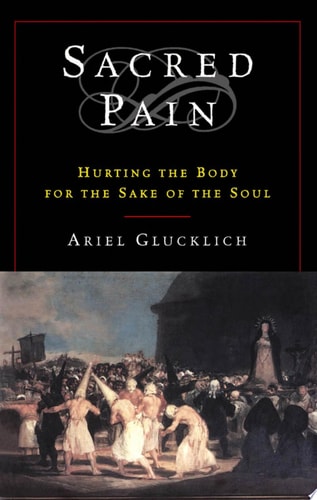
Sacred Pain
0
0
As an Amazon Associate and affiliate partner, Menrva Books earns from qualifying purchases. Learn more
Author Description
Why Would Anyone Seek Out The Very Experience The Rest Of Us Most Wish To Avoid? Why Would Religious Worshipers Flog Or Crucify Themselves, Sleep On Spikes, Hang Suspended By Their Flesh, Or Walk For Miles Through Scorching Deserts With Bare And Bloodied Feet? In This Insightful New Book, Ariel Glucklich Argues That The Experience Of Ritual Pain, Far From Being A Form Of A Madness Or Superstition, Contains A Hidden Rationality And Can Bring About A Profound Transformation Of The Consciousness And Identity Of The Spiritual Seeker. Steering A Course Between Purely Cultural And Purely Biological Explanations, Glucklich Approaches Sacred Pain From The Perspective Of The Practitioner To Fully Examine The Psychological And Spiritual Effects Of Self-hurting. He Discusses The Scientific Understanding Of Pain, Drawing On Research In Fields Such As Neuropsychology And Neurology. He Also Ranges Over A Broad Spectrum Of Historical And Cultural Contexts, Showing The Many Ways Mystics, Saints, Pilgrims, Mourners, Shamans, Taoists, Muslims, Hindus, Native Americans, And Indeed Members Of Virtually Every Religion Have Used Pain To Achieve A Greater Identification With God. He Examines How Pain Has Served As A Punishment For Sin, A Cure For Disease, A Weapon Against The Body And Its Desires, Or A Means By Which The Ego May Be Transcended And Spiritual Sickness Healed. When Pain Transgresses The Limits, The Muslim Mystic Mizra Asadullah Ghalib Is Quoted As Saying, It Becomes Medicine. Based On Extensive Research And Written With Both Empathy And Critical Insight, Sacred Pain Explores The Uncharted Inner Terrain Of Self-hurting And Reveals How Meaningful Suffering Has Been Used To Heal The Human Spirit.
Menrva's Summary
THE THESIS
This book investigates the underlying rationality and transformative potential of ritual pain within diverse religious traditions. Ariel Glucklich, a scholar of religion, synthesizes biological, psychological, and cultural frameworks to argue that self-inflicted suffering is a deliberate practice rather than mere superstition. By examining the practitioner's internal experience, the author posits that pain serves as a mechanism for transcending the ego and achieving spiritual healing.
THE SCOPE MAP
What You Will Find
- Analysis of neurobiological and neuropsychological responses to intense physical pain.
- Comparative study of ritual practices across traditions including Hinduism, Islam, Taoism, and Native American spirituality.
- Examination of pain as a tool for penance, purification, and the dissolution of the self.
- Synthesis of historical accounts and contemporary ethnographic observations of self-mortification.
THE AUTHORITY PERSPECTIVE
Scholars and readers frequently note the book's balanced approach, which successfully bridges the gap between biological reductionism and purely cultural interpretation. Experts highlight this as a significant contribution to the study of religious phenomenology and the psychology of ritual behavior.
Page Count:
288
Publication Date:
2003-01-01
Publisher:
Oxford University Press
ISBN-10:
0198030401
ISBN-13:
9780198030409
History
Psychology
Spirituality
Religion
Sociology
Anthropology
Community Tags
Similar Books