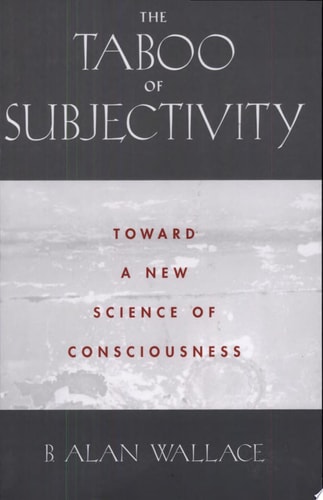
The Taboo of Subjectivity
0
0
As an Amazon Associate and affiliate partner, Menrva Books earns from qualifying purchases. Learn more
Author Description
This Book Takes A Bold New Look At Ways Of Exploring The Nature, Origins, And Potentials Of Consciousness Within The Context Of Science And Religion. Alan Wallace Draws Careful Distinctions Between Four Elements Of The Scientific Tradition: Science Itself, Scientific Realism, Scientific Materialism, And Scientism. Arguing That The Metaphysical Doctrine Of Scientific Materialism Has Taken On The Role Of Ersatz-religion For Its Adherents, He Traces Its Development From Its Greek And Judeo-christian Origins, Focusing On The Interrelation Between The Protestant Reformation And The Scientific Revolution. He Looks At Scientists' Long Term Resistance To The Firsthand Study Of Consciousness And Details The Ways In Which Subjectivity Has Been Deemed Taboo Within The Scientific Community. In Conclusion, Wallace Draws On William James's Idea For A Science Of Religion That Would Study The Nature Of Religious And, In Particular, Contemplative Experience. In Exploring The Nature Of Consciousness, This Groundbreaking Study Will Help To Bridge The Chasm Between Religious Belief And Scientific Knowledge. It Is Essential Reading For Philosophers And Historians Of Science, Scholars Of Religion, And Anyone Interested In The Relationship Between Science And Religion.
Menrva's Summary
THE THESIS
This book investigates the historical and philosophical reasons why the scientific community has marginalized the study of subjective consciousness. B. Alan Wallace, a scholar with extensive training in both Western philosophy and Buddhist contemplative traditions, examines the metaphysical underpinnings of modern science. He argues that scientific materialism has evolved into a dogmatic belief system that restricts inquiry into the nature of the mind. By tracing the historical development of these ideas from the Protestant Reformation to the present, Wallace proposes a more inclusive framework for understanding human experience.
THE SCOPE MAP
What You Will Find
- A historical analysis of the intersection between the Protestant Reformation and the Scientific Revolution.
- A critical taxonomy of scientific traditions, distinguishing between science, realism, materialism, and scientism.
- An examination of the long-term academic resistance toward the firsthand study of consciousness.
- A proposal for a new science of religion based on the contemplative methodologies suggested by William James.
THE AUTHORITY PERSPECTIVE
Scholars and philosophers of science frequently cite this work for its rigorous critique of materialist dogma in modern academia. Readers often note the academic density of the prose, which serves as a foundational text for those interested in the intersection of contemplative studies and empirical science.
Page Count:
234
Publication Date:
2004-01-01
Publisher:
Oxford University Press
ISBN-10:
0198038607
ISBN-13:
9780198038603
Philosophy
Religion
Science
Consciousness
Community Tags
Similar Books