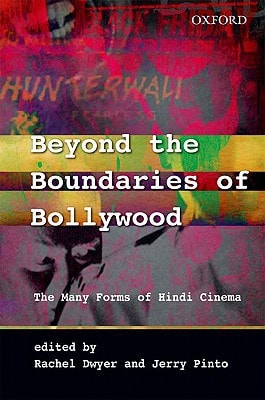
Beyond the Boundaries of Bollywood: The Many Forms of Hindi Cinema
0
0
As an Amazon Associate and affiliate partner, Menrva Books earns from qualifying purchases. Learn more
Author Description
Surveying the field since the mid-1990s, this book looks at Hindi cinema which lies beyond Bollywood. While the first part includes seven essays by established scholars and film critics, in the second part we have a series of interviews of individuals connected with the film industry in India.Looking at the many meanings of "Bollywood," the essays bring together themes and ideas which are essential to understanding the history of Indian cinema. They deal with Hindi cinema that predates Bollywood, as well as cinema which is made once Bollywood emerges and the culture which stretches beyond cinema. Interesting light is shed on cinema in Bombay in the 1920s, the transition to sound in Bombay cinema, and horror films Conducted by Jerry Pinto, the interviews bring to life the changing world of the contemporary Hindi cinema that is developing its own niche, ranging from separate production wings of major companies, to its own directors, stars, and distribution circuits. They bring out strategies, ideas, and reflections on the current situation from key figures who lie at the heart of these changes: from the revolution in DVD pricing and the effect on filmmaking to the development of "hatke" cinema and the role of film festivals in the shaping of popular culture.
Menrva's Summary
THE THESIS
This book investigates the multifaceted landscape of Hindi cinema that exists outside the conventional, commercial framework of Bollywood. Authors Rachel E. Dwyer and Jerry Pinto, both established experts in Indian cultural studies and film history, curate a collection of essays and interviews to analyze the historical evolution and contemporary shifts within the Indian film industry. By examining both pre-Bollywood traditions and modern niche productions, the text provides a comprehensive framework for understanding the broader cultural impact of Hindi-language filmmaking.
THE SCOPE MAP
What You Will Find
- Historical analysis of Bombay cinema dating back to the 1920s and the transition to sound.
- Examination of specific genres such as horror films and the rise of independent or "hatke" cinema.
- Primary source interviews with industry professionals, directors, and stars regarding production and distribution shifts.
- Critical discussion on the impact of economic factors, such as DVD pricing and film festivals, on popular culture.
THE AUTHORITY PERSPECTIVE
Experts and film scholars recognize this work as a significant contribution to the study of Indian cinema, particularly for its ability to bridge academic analysis with industry-focused perspectives. Readers frequently note the clarity of the essays and the value of the interviews in providing a nuanced view of the industry's structural changes.
Page Count:
320
Publication Date:
2011-06-13
Publisher:
Oxford University Press
ISBN-10:
019806926X
ISBN-13:
9780198069263
Non-Fiction
Film Studies
Motion pictures
Cinema
Community Tags
Similar Books